

Best Chemical Peel Types Compared in 2026: TCA Wins
If your skin feels dull, sun-worn, or uneven heading into 2026, a chemical peel remains one of the most predictable ways to reset your skin's texture and tone — but which type actually fits your skin matters more than the marketing name on the menu. Best overall chemical peel type for 2026: a medium-depth TCA peel for sun damage and fine lines. Best for sensitive or first-time skin: a superficial glycolic or lactic acid peel. Best for pigmentation without visible downtime: PRX-T33, a no-peel peel offered at Skindale Medspa as the Ready-Set-Glow Peel. Best for acne-prone or oily skin: a Jessner peel. Best for deep wrinkles or scarring: a deep phenol peel done under medical supervision.
- Medium TCA peels win overall for sun damage and fine lines among the best chemical peel types compared for 2026.
- PRX-T33, a no-peel peel, treats pigmentation with no visible flaking or downtime.
- Superficial glycolic and lactic peels are the safest entry point for sensitive or first-time skin.
- Deep phenol peels deliver the most dramatic single-treatment resurfacing but need 2 to 3 weeks of recovery.
- Skindale Medspa in Scottsdale offers the no-peel Ready-Set-Glow Peel and facial-plus-peel combinations for lighter maintenance.
Why this matters
Scottsdale's sun exposure ages skin faster than most climates, and by the time most clients book a chemical peel consultation at Skindale Medspa they're dealing with more than one concern at once — sun spots layered over texture, or acne scarring layered over dullness. Picking the wrong depth either wastes a session on a concern it can't reach, or hands you downtime you didn't need to sign up for.
The five categories below cover the range clients actually choose between in 2026: no-peel biorevitalization, superficial acid peels, medium-depth TCA, Jessner combination peels, and deep phenol peels. Each solves a different problem. None of them is universally "best" — the best chemical peel type is the one matched to your skin tone, your concern, and how much recovery time you have.
What makes the best chemical peel type
- Skin concern match — pigmentation, texture, acne, laxity, and deep scarring each respond to different peel chemistries.
- Downtime tolerance — some peels need zero recovery days, others need 2 to 3 weeks away from public view.
- Peel depth — how far the solution penetrates: epidermis only, mid-dermis, or deep dermis.
- Number of sessions — a single deep peel versus a series of lighter treatments spaced weeks apart.
- Provider supervision level — medspa-administered versus procedures that require closer medical monitoring.
- Skin tone and pigmentation risk — deeper peels carry more risk of post-inflammatory hyperpigmentation on darker skin without a careful protocol.
Chemical peel types at a glance
| Peel Type | Best For | Standout Feature | Key Limitation |
|---|---|---|---|
| PRX-T33 (No-Peel Peel) | Pigmentation without downtime | No visible peeling or flaking after treatment | Needs a series of sessions for full effect |
| Superficial Peel (glycolic/lactic) | Sensitive or first-time skin | Gentle exfoliation with almost no recovery time | Results are subtle per single session |
| Medium TCA Peel | Sun damage and fine lines | Penetrates the mid-dermis for visible resurfacing | 5 to 7 days of visible peeling |
| Jessner Peel | Acne-prone or oily skin | Combines salicylic, lactic, and resorcinol acids for oil control | Can sting more than a single-acid peel |
| Deep Phenol Peel | Significant wrinkles or scarring | Reaches the deepest dermal layer for dramatic resurfacing | 2 to 3 weeks of downtime, medical supervision required |
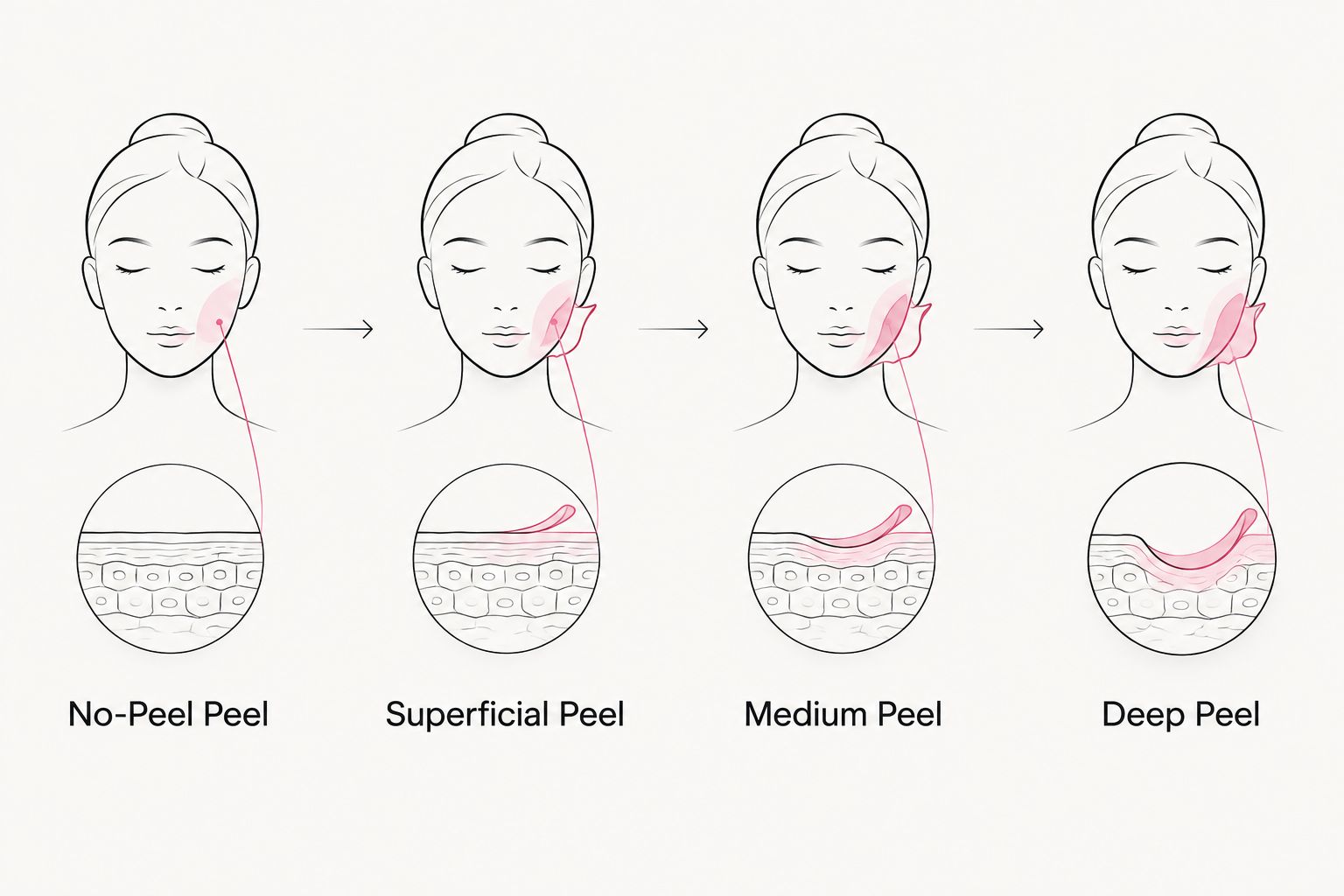
1. PRX-T33 (No-Peel Peel): best chemical peel for pigmentation without downtime
PRX-T33 is a biorevitalizing solution built on TCA and kojic acid that works below the surface without stripping the outer skin layer — there's no visible flaking, no obvious "peel week." Skindale Medspa offers this as the Ready-Set-Glow Peel, aimed at pigmentation, sun spots, and overall skin quality rather than a single dramatic resurfacing event.
PRX-T33 pros:
- No visible peeling or flaking after treatment
- Suitable for most skin tones, including tones that carry higher pigmentation risk with deeper peels
- Can be layered with facials or laser sessions without extending downtime
- Targets melasma and sun-related discoloration directly
PRX-T33 cons:
- Needs a series of sessions rather than one visit for full effect
- Change is gradual, not the single-visit transformation a TCA or phenol peel delivers
- Maintenance sessions are typically needed to hold results
Best for: clients with pigmentation or dull, uneven tone who cannot take downtime. Verdict: Buy.
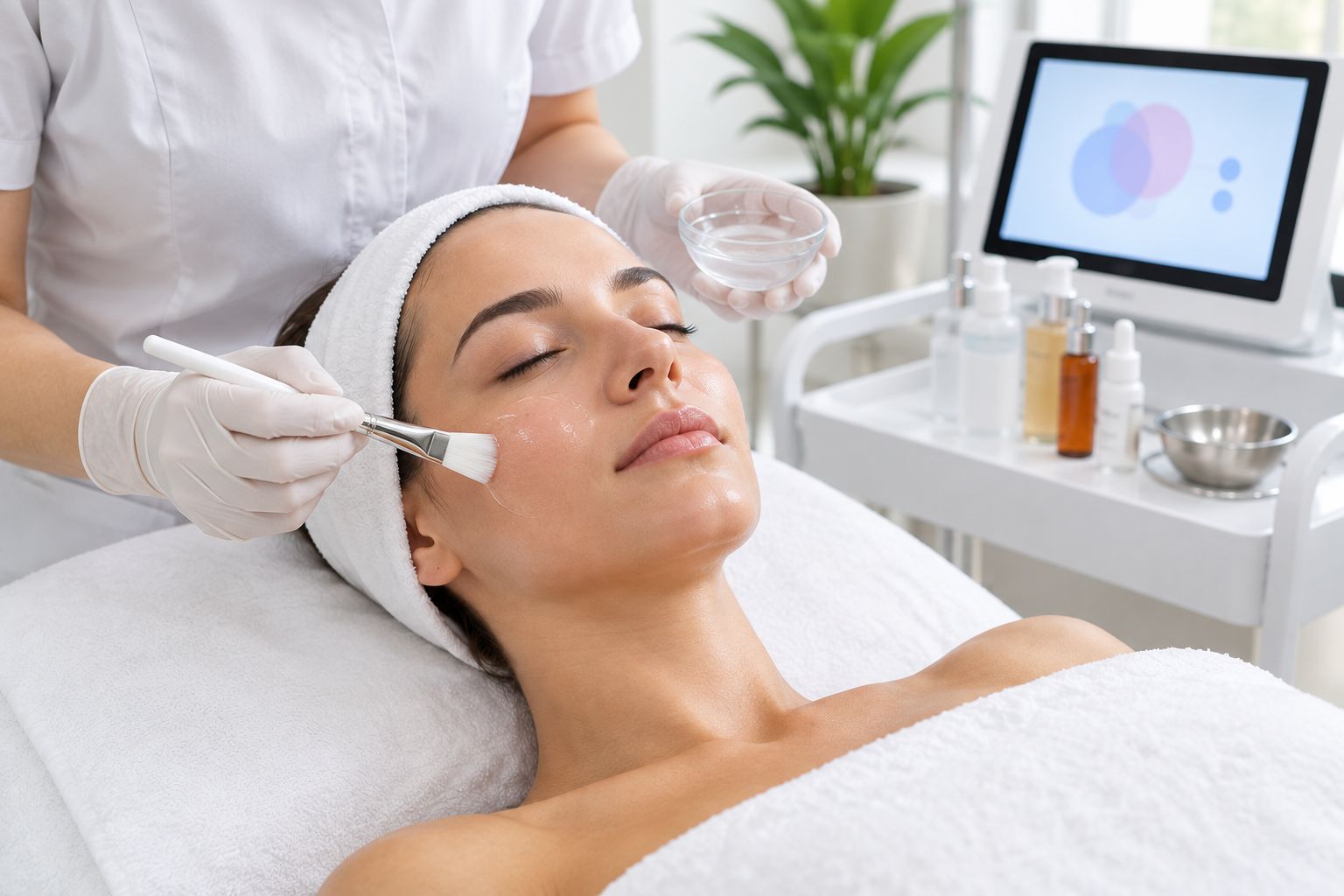
2. Superficial Peel (Glycolic or Lactic Acid): best chemical peel for sensitive or first-time skin
Superficial peels use alpha-hydroxy acids like glycolic or lactic acid to exfoliate only the outermost skin layer. They're the entry point most providers recommend before stepping up to anything stronger, especially for skin that reacts easily to actives.
Superficial peel pros:
- Minimal irritation and 0 to 3 days of mild pinkness at most
- Safe monthly cadence for ongoing maintenance
- Improves texture, mild dullness, and light congestion
- Low risk profile across most skin tones
Superficial peel cons:
- Results per session are subtle, not dramatic
- Not strong enough to meaningfully address deep sun damage or scarring
- Consistency over months matters more than any single session
Best for: sensitive skin, first-time peel clients, or ongoing monthly maintenance. Verdict: Buy.
3. Medium TCA Peel: best chemical peel for sun damage and fine lines
A medium-depth peel using trichloroacetic acid (TCA) reaches into the mid-dermis, which is deep enough to visibly soften fine lines and fade sun damage after a single treatment. This is the peel most clients picture when they hear "chemical peel" — noticeable peeling, then noticeably smoother skin.
Medium TCA peel pros:
- Visible resurfacing after one treatment
- Effective on photoaging, fine lines, and moderate sun damage
- Results can hold for several months with maintenance
- Works well as an occasional reset rather than a frequent routine
Medium TCA peel cons:
- 5 to 7 days of visible peeling and redness
- Strict sun avoidance required during healing
- Risk of post-inflammatory hyperpigmentation on darker skin tones without a careful protocol
Best for: clients with visible sun damage or fine lines who can take a week of downtime. Verdict: Buy.
4. Jessner Peel: best chemical peel for acne-prone or oily skin
A Jessner peel combines salicylic acid, lactic acid, and resorcinol into one solution, which makes it particularly effective at cutting through oil and congestion. Providers can apply it in light or deeper layers depending on how much peeling a client is ready for.
Jessner peel pros:
- Strong at controlling oil and reducing active breakouts
- Helps mild acne scarring and post-acne discoloration
- Flexible strength — one to multiple layers per session
- Salicylic acid component is naturally anti-inflammatory
Jessner peel cons:
- Noticeable stinging sensation during application
- Not ideal for very dry or reactive skin
- Downtime varies depending on how many layers are applied, which makes it less predictable than a single-acid peel
Best for: oily or acne-prone skin with active breakouts and mild scarring. Verdict: Buy.
5. Deep Phenol Peel: best chemical peel for deep wrinkles or scarring
A phenol peel penetrates to the deepest layer of the dermis, which is why it produces the most dramatic single-treatment change of any peel on this list — and why it demands the most caution. This is typically a once-in-a-while or even once-in-a-lifetime procedure rather than a routine treatment.
Deep phenol peel pros:
- Most significant single-treatment resurfacing available
- Effective on deep static wrinkles and significant scarring
- Results can last years rather than months
Deep phenol peel cons:
- 14 to 21 days of downtime
- Requires close medical supervision, often with cardiac monitoring during the procedure
- Not appropriate for darker skin tones due to a higher risk of permanent pigment change
- Rare candidate profile compared to the other four peel types
Best for: significant wrinkling or scarring in candidates cleared for a deep procedure. Verdict: Hold — worth a real consultation before committing, given the recovery and screening involved.


“A peel that leaves you red and peeling for two weeks isn't automatically better than one that doesn't — it's just deeper.”
How we ranked these chemical peel types
Each category is ranked by matching it to one distinct concern rather than stacking them against each other on the same scale — pigmentation, sensitivity, sun damage, oiliness, and deep wrinkling don't compete for the same slot. Depth, downtime, session count, and skin-tone safety were weighed against the criteria above for each type, using the same standards a provider applies during a real consultation in 2026.
Which chemical peel type should you choose in 2026?
If your main concern is sun damage or fine lines and you can take a week of downtime, the medium TCA peel is the strongest single choice for 2026. If you want results with zero visible recovery, PRX-T33 — offered at Skindale Medspa as the Ready-Set-Glow Peel — is the safer default. Acne-prone skin does better with a Jessner peel, and deep scarring or significant wrinkling is the only case where a phenol peel's downtime is worth discussing with a provider first.
When in doubt, start lighter: a superficial or PRX-T33 peel lets your provider see how your skin actually responds before anyone recommends going deeper.
FAQ
What is the best chemical peel for pigmentation?
PRX-T33, a no-peel peel, is the strongest match for pigmentation without downtime because it targets discoloration without stripping the outer skin layer. A medium TCA peel also fades sun spots but requires 5 to 7 days of visible peeling.
Is a TCA peel better than a glycolic peel?
A TCA peel goes deeper and produces more visible resurfacing in a single session, but a glycolic peel is gentler and better for sensitive or first-time skin. Neither is universally better — they solve different problems.
How much downtime does a chemical peel need in 2026?
Downtime ranges from 0 to 3 days for a superficial peel, 5 to 7 days for a medium TCA peel, up to 14 to 21 days for a deep phenol peel. PRX-T33, the no-peel option, typically involves no visible downtime at all.
Can I get a chemical peel with sensitive skin?
Yes — a superficial glycolic or lactic acid peel is built for sensitive skin and carries minimal irritation. PRX-T33 is another low-irritation option for sensitive skin with pigmentation concerns.
What is a no-peel peel like PRX-T33?
PRX-T33 is a biorevitalizing solution of TCA and kojic acid that improves skin quality and pigmentation without causing visible flaking. It works through a series of sessions rather than one dramatic peel event.
How many chemical peel sessions are needed to see results?
A medium TCA or Jessner peel can show change after one session, while PRX-T33 and superficial peels typically need a series of treatments spaced weeks apart. Deep phenol peels are usually a single procedure.
Are deep phenol peels safe in 2026?
Deep phenol peels are safe for carefully screened candidates under medical supervision, but they carry real risks including 2 to 3 weeks of downtime and pigment change risk on darker skin. They are not routine treatments.
How do I know which chemical peel type is right for my skin?
Match the peel to your specific concern first — pigmentation, sun damage, acne, or deep wrinkling — then factor in how much downtime you can take. A personalized consultation is the fastest way to narrow the five options down to one.
One last thing
The amount a peel visibly flakes is not a scorecard for how well it worked — a no-peel option like PRX-T33 can improve pigmentation as effectively as a treatment that leaves you peeling for a week, just on a different timeline. Judge results at the follow-up appointment, not by how much skin came off in the shower.