

Best Neck and Jawline Contouring Treatments Compared 2026
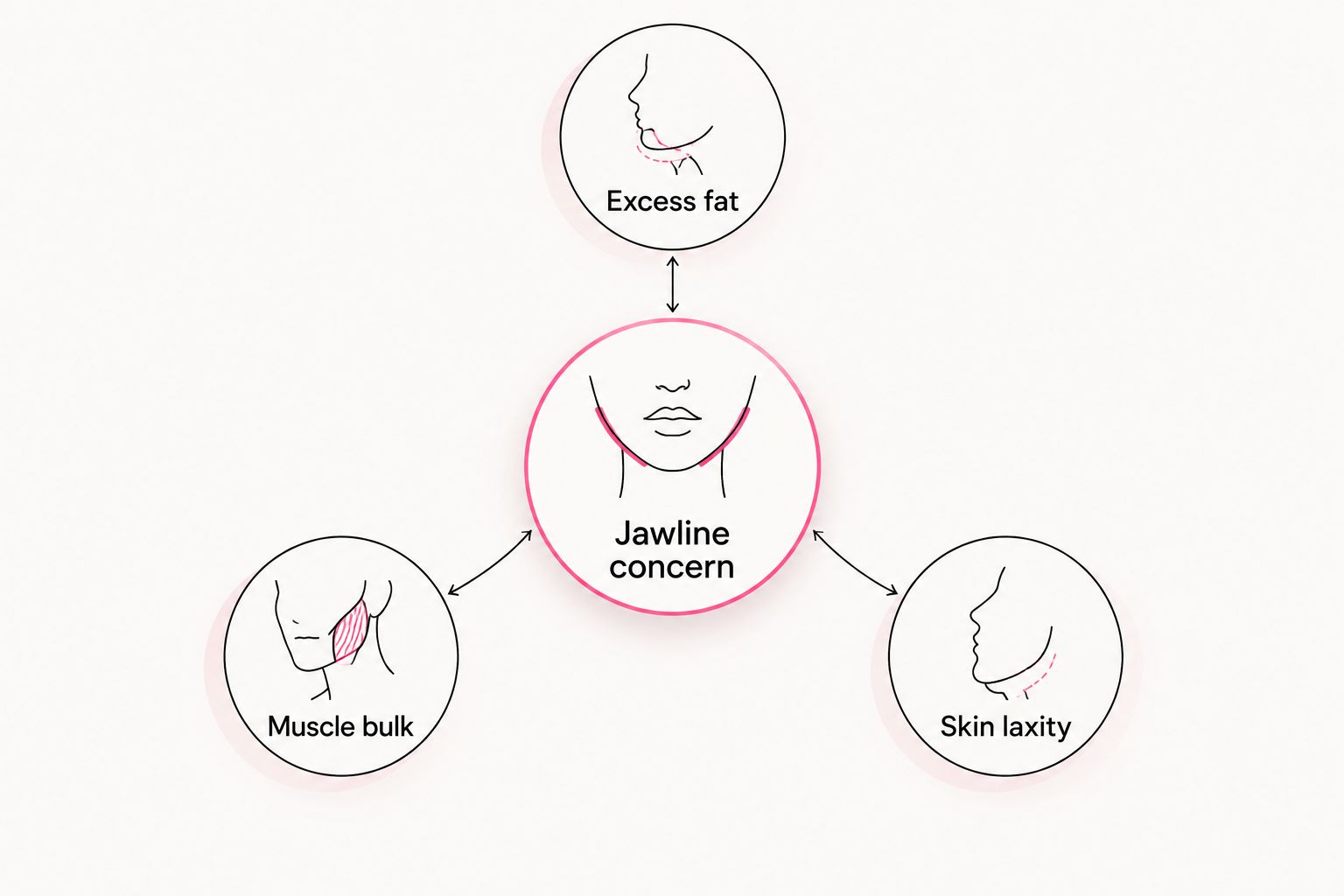
Softness under the chin, a jawline that's lost its edge, or a face that looks squarer than you'd like — each has a different cause, and each responds to a different treatment. In 2026, the most reliable neck and jawline contouring treatments fall into three buckets: fat reduction, muscle relaxation, and skin tightening. Matching your concern to the right bucket matters more than picking whatever's trending.
- Kybella is the best neck and jawline contouring treatment for stubborn submental fat that diet and exercise haven't moved.
- Masseter Botox slims a wide jawline caused by muscle bulk, not fat or bone structure.
- Ultherapy and Scarlet RF microneedling both tighten loose skin along the jaw and neck, with Scarlet RF also improving texture.
- Dermal filler adds structure to a soft or receding jawline; laser resurfacing refines skin tone after contouring.
- The right pick depends on whether your concern is fat, muscle, or skin laxity — not on popularity.
Why this matters
Most people asking about jawline contouring assume there's one treatment that does it all. There isn't. A double chin caused by fat behaves nothing like a wide jaw caused by an overworked masseter muscle, and neither responds to the same fix as skin that's lost some elasticity with age.
At Skindale Medspa, treatment plans start with figuring out which of the three is actually driving the concern — because injecting fat-dissolving medication into a muscle problem, or tightening skin that's fine but sitting over excess fat, wastes time and money. Overall body composition plays a role too; for some clients, a broader look at medical weight loss support does more for jawline definition than any single injectable.
What makes the best neck and jawline contouring treatment
- Matches the actual cause — fat, muscle, or skin laxity require different mechanisms, not the same injectable
- Established safety profile — FDA-approved or FDA-cleared where available, with a documented track record
- Downtime that fits your life — some options need zero recovery, others ask for a few days
- How long results actually last — some treatments are permanent, others need maintenance every few months
- Ease of combining with other treatments if more than one concern is present
- Comfort and predictability of the appointment itself
Neck and jawline contouring treatments at a glance
| Treatment | Best for | Standout feature | Key limitation |
|---|---|---|---|
| Kybella | Submental fat (double chin) | Permanently destroys treated fat cells | Needs multiple sessions, no skin-tightening effect |
| Masseter Botox | Wide or square jaw from muscle bulk | Also eases jaw clenching | Temporary, off-label use |
| Ultherapy | Mild-to-moderate skin laxity | No downtime, single session | Gradual results over months |
| Scarlet RF microneedling | Tightening plus texture | Dual-purpose in one session | Usually needs a series |
| Dermal filler | Soft or receding jawline | Immediate, reversible results | Adds volume, doesn't remove it |
| Laser skin resurfacing (face and neck) | Refining tone and texture | Improves an often-neglected area | Doesn't change fat, muscle, or laxity |
1. Kybella: best neck and jawline contouring treatment for submental fat
Kybella (deoxycholic acid) is an injectable that breaks down fat cells under the chin; your body clears the treated fat over the following weeks. It's been FDA-approved for submental fullness since 2015 and doesn't require surgery or anesthesia beyond a topical numbing cream.
Kybella pros:
- Destroys treated fat cells permanently, since the compound disrupts the cell membrane
- No incisions, no general anesthesia
- Works well for people whose chin fullness hasn't budged with diet or exercise
Kybella cons:
- Usually needs multiple sessions spaced about a month apart for full results
- Swelling and tenderness are common for several days after each visit
- Doesn't tighten skin, so it won't help if laxity is the main issue
Best for: submental fat that holds on despite diet and exercise.
Kybella verdict: Buy — if the fullness under your chin doesn't move when you flex, it's fat, and that changes which treatment works.
"If your jawline changes shape when you clench, muscle is the cause — and that means Botox, not filler."
2. Masseter Botox: best neck and jawline contouring treatment for a wide, muscle-driven jaw
Injecting Botox or Dysport into the masseter muscle relaxes it, so it gradually shrinks, and the jawline narrows from muscle bulk rather than bone or fat. It's an off-label use of a familiar wrinkle-relaxing injectable, and it's a common request at medspas in Scottsdale for people whose jaw looks wider when they clench.
Masseter Botox pros:
- Quick, in-office appointment with no downtime
- Also eases jaw clenching and tension for people who grind their teeth
- Results build gradually over several weeks for a natural-looking change
Masseter Botox cons:
- Effects are temporary and typically fade over a few months, requiring repeat visits
- It's an off-label application, so provider experience specifically with jawline slimming matters
- Won't change a jaw width that's driven by bone structure rather than muscle
Best for: a wide or square jawline caused by muscle bulk, not fat or skeletal structure.
Masseter Botox verdict: Buy — if flexing noticeably widens your jaw, muscle is the driver, and this is the direct fix.
3. Ultherapy: best neck and jawline contouring treatment for mild skin laxity
Ultherapy uses focused ultrasound energy to heat deeper skin layers and trigger new collagen production, gradually lifting and tightening skin along the jaw and neck. It's been FDA-cleared for neck lifting since 2009, with no incisions and essentially no downtime.
Ultherapy pros:
- Single-session treatment; results build over two to three months as collagen rebuilds
- No cutting, no real recovery time — most people resume normal activity the same day
- Layers well on top of fat- or muscle-focused treatments
Ultherapy cons:
- Best suited to mild-to-moderate laxity, not the more significant sagging a surgical lift addresses
- Discomfort during treatment varies and can be noticeable for some people
- Results are gradual, so it's a poor fit if you want an immediate change
Best for: mild-to-moderate skin laxity along the jaw and neck, without surgery.
Ultherapy verdict: Wait if you need an immediate result; this treatment rewards patience over two to three months.
4. Scarlet RF microneedling: best neck and jawline contouring treatment for tightening plus texture
Scarlet RF combines microneedling with radiofrequency energy, delivering heat deeper into the skin than microneedling alone. It tightens skin and stimulates collagen while also improving texture, which makes it a dual-purpose option when both concerns overlap.
Scarlet RF microneedling pros:
- Addresses tightening and texture in the same session
- Shorter downtime than more aggressive resurfacing lasers
- Adjustable depth settings suit the thinner skin on the neck
Scarlet RF microneedling cons:
- Usually needs a series of sessions, not one visit, for full collagen benefit
- Redness and pinpoint bleeding are common for a day or two afterward
- Less dramatic tightening on more pronounced laxity than Ultherapy
Best for: combining skin tightening with texture and tone improvement in one plan.
Scarlet RF verdict: Buy if tightening and texture are both on your list — this covers both in fewer separate appointments.
5. Dermal filler: best neck and jawline contouring treatment for a soft or receding jawline
Hyaluronic acid filler placed along the jawline adds structure and definition, sharpening an angle that's naturally soft or has become less defined with age. It's an additive approach — building the jawline up rather than removing fat or tightening skin.
Dermal filler pros:
- Visible results immediately after treatment
- Reversible with an enzyme if adjustment is needed
- Combines easily with fat-reducing or skin-tightening treatments in one plan
Dermal filler cons:
- Results typically last roughly 6 to 18 months depending on the product and your metabolism, so upkeep is part of the plan
- Adds volume rather than removing it — won't help if fullness is the concern
- Requires a provider experienced in facial anatomy to avoid an over-filled look
Best for: a soft or receding jawline that needs structure, not fat removal.
Dermal filler verdict: Buy if your jawline lacks definition rather than having too much fullness.
6. Laser skin resurfacing (face and neck): best neck and jawline contouring treatment for finishing touches
Once fat, muscle, or structural concerns are addressed, laser resurfacing refines the skin's tone and texture, smoothing fine lines and evening pigment across the face and neck. Skindale Medspa's Laser Facial for Face and Neck uses this approach to complement contouring rather than replace it.
Laser resurfacing pros:
- Improves overall skin quality — tone, texture, fine lines — on an area often skipped in skincare routines
- Minimal downtime compared with more aggressive resurfacing lasers
- Works well as a finishing step after fat- or muscle-focused contouring
Laser resurfacing cons:
- Doesn't change fat volume, muscle bulk, or skin laxity on its own
- Multiple sessions are typically needed for cumulative improvement
- Sun protection afterward is non-negotiable, since treated skin is more sensitive to UV exposure
Best for: refining tone and texture on the neck after the underlying concern is treated.
Laser resurfacing verdict: Buy as a complement to another treatment on this list, not usually as a standalone jawline fix.
How we ranked these
Each treatment above was placed by what it actually does to the tissue — fat, muscle, or skin — not by how popular it is. Safety history, downtime, how long results hold, and how easily a treatment combines with others all factored into the "best for" label each one carries. None of these treatments is universally "best"; the right one depends entirely on which of the three underlying causes matches your concern.
Which neck and jawline contouring treatment should you choose in 2026?
If pinching reveals fat, Kybella is the direct answer. If clenching visibly widens your jaw, masseter Botox targets the muscle causing it. If skin has loosened but fat and muscle aren't the issue, Ultherapy or Scarlet RF microneedling address laxity, with Scarlet RF adding a texture benefit. If the jawline lacks structure, dermal filler builds it back. And once the underlying concern is treated, laser resurfacing polishes tone and texture on top.
A personalized consultation is the fastest way to sort out which bucket your concern falls into — guessing from a list rarely gets it right on the first try.
FAQ
What's the best treatment for a double chin without surgery?
Kybella is the leading non-surgical option for a double chin caused by submental fat in 2026. It's an injectable that permanently destroys treated fat cells over a series of monthly sessions.
Can Botox actually slim a wide jawline?
Yes, when the width comes from an enlarged masseter muscle rather than bone structure. Botox relaxes the muscle so it gradually shrinks, narrowing the jaw over several weeks.
Is Ultherapy or Scarlet RF better for loose skin on the neck?
Ultherapy generally delivers a stronger lifting effect for skin laxity alone, while Scarlet RF microneedling adds a texture-improvement benefit in the same sessions. The choice depends on whether texture is also a concern.
How long do jawline filler results last?
Hyaluronic acid filler in the jawline typically lasts 6 to 18 months, depending on the specific product used and how quickly your body metabolizes it. Maintenance appointments are part of the plan, not a sign something went wrong.
Does masseter Botox change your bite?
No, masseter Botox targets muscle bulk, not bone or teeth alignment, so it doesn't change your bite. Some people also notice less jaw tension if they clench or grind their teeth.
Is neck and jawline contouring painful?
Most of these treatments use a topical numbing cream and are described as tolerable rather than painful. Ultherapy tends to cause more noticeable discomfort during treatment than injectables or microneedling.
Can these treatments be combined?
Yes, and combining is common when more than one cause is present, such as fat plus skin laxity. A personalized plan usually sequences treatments rather than doing everything at once.
How many Kybella sessions are typically needed?
Kybella protocols generally call for several sessions spaced about a month apart, following the treatment's FDA labeling. The exact number depends on the amount of submental fat present.
One last thing
Masseter Botox has a secondary effect that surprises most people. Because it relaxes the muscle used for clenching, it often eases jaw tension and grinding-related discomfort along with the slimming effect. If teeth grinding is part of your picture, that's worth mentioning at your consultation — it can shape which treatment order makes sense in 2026.
Related guides