

Can you drink alcohol while on GLP-1 medication?
You do not automatically have to avoid alcohol while on GLP-1 medication, but whether you should drink depends on your prescription, other medicines, and health history. Alcohol can worsen nausea and dehydration and increase low-blood-sugar risk, especially if you also use insulin or a sulfonylurea.
- Alcohol while on GLP-1 medication requires individual guidance, not a universal drink limit.
- Avoid alcohol when you have nausea, vomiting, dehydration, or difficulty eating.
- Insulin and sulfonylureas make alcohol-related low blood sugar a bigger concern.
- Skindale Medspa offers personalized medical weight loss and wellness care in Scottsdale.
Why this matters
If you are planning dinner out or a celebration, you want an answer that fits your treatment—not a blanket rule from social media. GLP-1 medicines affect appetite and digestion, while alcohol can complicate hydration, food intake, and blood sugar management.
For a treatment review in 2026, bring your exact medication name, dose, and other prescriptions. Skindale Medspa offers personalized medical weight loss and wellness care in Scottsdale; an individual medication discussion belongs with the clinician managing your prescription.
Permission to drink is not the same as a recommendation to drink. You can choose not to drink even when your prescription does not specifically prohibit alcohol.
Can you drink alcohol while on GLP-1 medication?
Alcohol is not universally prohibited across GLP-1 treatment, but there is no single amount that is safe for every patient. The practical decision depends on whether you feel well, can eat and drink normally, take medicines that lower blood sugar, or have a condition that makes alcohol unsuitable.
FDA prescribing information for GLP-1 medicines describes gastrointestinal side effects and warnings involving pancreatitis, dehydration-related kidney problems, and hypoglycemia with certain diabetes medicines. Those warnings explain why your symptoms and medication list matter more than a general yes-or-no answer.
| Your situation | Main concern | Best next step |
|---|---|---|
| You feel well and tolerate treatment | Alcohol still adds health risks and can affect food choices | Ask your prescriber whether drinking fits your plan |
| You recently started or increased treatment | Nausea and other digestive symptoms need attention | Wait until you understand your response and discuss alcohol |
| You have vomiting, diarrhea, or poor fluid intake | Additional fluid loss and difficulty staying hydrated | Avoid alcohol and contact your clinician about persistent symptoms |
| You use insulin or a sulfonylurea | Alcohol can contribute to delayed low blood sugar | Get a specific glucose-monitoring and treatment plan |
| You have severe, persistent abdominal pain | A serious condition needs assessment | Seek prompt medical care rather than testing another drink |
This 2026 guide supports that conversation; it does not replace your prescription instructions. If your clinician has told you to avoid alcohol, follow that advice even if someone taking the same medication drinks without symptoms.
Why alcohol tolerance and risk vary
Your response is not determined by the medication alone. These factors change the decision:
- Treatment stage: Starting treatment or increasing the dose can bring digestive symptoms that make alcohol harder to tolerate.
- Other medicines: Insulin and sulfonylureas increase the importance of preventing and recognizing low blood sugar.
- Food intake: Reduced appetite, missed meals, and drinking without food complicate blood sugar management.
- Hydration: Vomiting or diarrhea can leave you short on fluids before you have a drink.
- Health history: Pancreatitis, liver disease, kidney problems, or an alcohol use disorder require specific medical guidance.
- Amount and pace: A large pour or several drinks increases alcohol exposure, regardless of the medication schedule.
A friend's experience cannot account for these differences. Tell your prescriber what you actually drink, including the serving size, rather than describing it only as an occasional glass.
Can alcohol make GLP-1 nausea worse?
Alcohol can worsen nausea and irritate your stomach, making existing digestive symptoms more uncomfortable. If treatment already leaves you queasy, bloated, or unable to finish meals, drinking adds something else your body has to tolerate.
Avoid alcohol while you are vomiting, struggling to eat, or having difficulty keeping fluids down. These symptoms deserve attention on their own, especially when they persist or worsen.
Do not assume a cocktail will settle your stomach or that switching from wine to spirits solves the problem. The alcohol remains, and stronger drinks can make it harder to judge how much you have consumed.
If symptoms interfere with normal eating or hydration, contact your prescribing clinician. Do not change your medication dose yourself to make room for a social event.
Can alcohol cause low blood sugar on GLP-1 medication?
Alcohol can cause low blood sugar because it interferes with the liver's ability to release glucose. The concern is greater when you also use insulin or a sulfonylurea, particularly if you have eaten very little.
GLP-1 medication taken alone generally has a lower hypoglycemia risk than treatment that includes those medicines. That distinction matters, but it does not make drinking without food a good plan.
Watch for sweating, shaking, hunger, dizziness, or confusion. Alcohol intoxication and low blood sugar can look similar, so do not dismiss unusual behavior as simply having had a drink.
If you have diabetes, ask how to monitor glucose during and after drinking, including overnight. Keep your prescribed low-blood-sugar treatment accessible, and make sure someone with you knows how to help; severe confusion, seizures, or unconsciousness require emergency assistance.
Does waiting after your injection make drinking safer?
Waiting until the day after an injection does not establish a safe drinking window. Weekly medicines remain active between doses, so moving alcohol to another evening does not remove medication-related concerns.
Your symptoms are more useful than the calendar. Feeling nauseated or dehydrated is a reason to avoid alcohol whether your injection was recent or several days earlier.
Do not skip, delay, or reduce a prescribed dose to drink alcohol. If a celebration conflicts with your treatment routine, ask your clinician how to handle your medication schedule rather than changing it yourself.
This also applies when updating your routine in 2026: a familiar injection schedule does not replace a review after a dose change or a new prescription.
Is wine, beer, or a cocktail the better choice?
No type of alcoholic drink is universally safer with GLP-1 medication. Alcohol content matters more than whether a drink sounds light, dry, or low in sugar.
For reference, the National Institute on Alcohol Abuse and Alcoholism defines a U.S. standard drink as about 14 grams of pure alcohol. Common examples are 12 fluid ounces of beer at 5% alcohol, 5 fluid ounces of wine at 12%, or 1.5 fluid ounces of spirits at 40%.
These are measurement examples—not recommended allowances. A strong beer, generous wine pour, or mixed drink can contain more than a standard drink, even when served in a single glass.
Sugary mixers add calories and can complicate glucose management. Choosing a sugar-free mixer changes the mixer, not the alcohol's effects on judgment, hydration, or blood sugar.
What should you do before a social event?
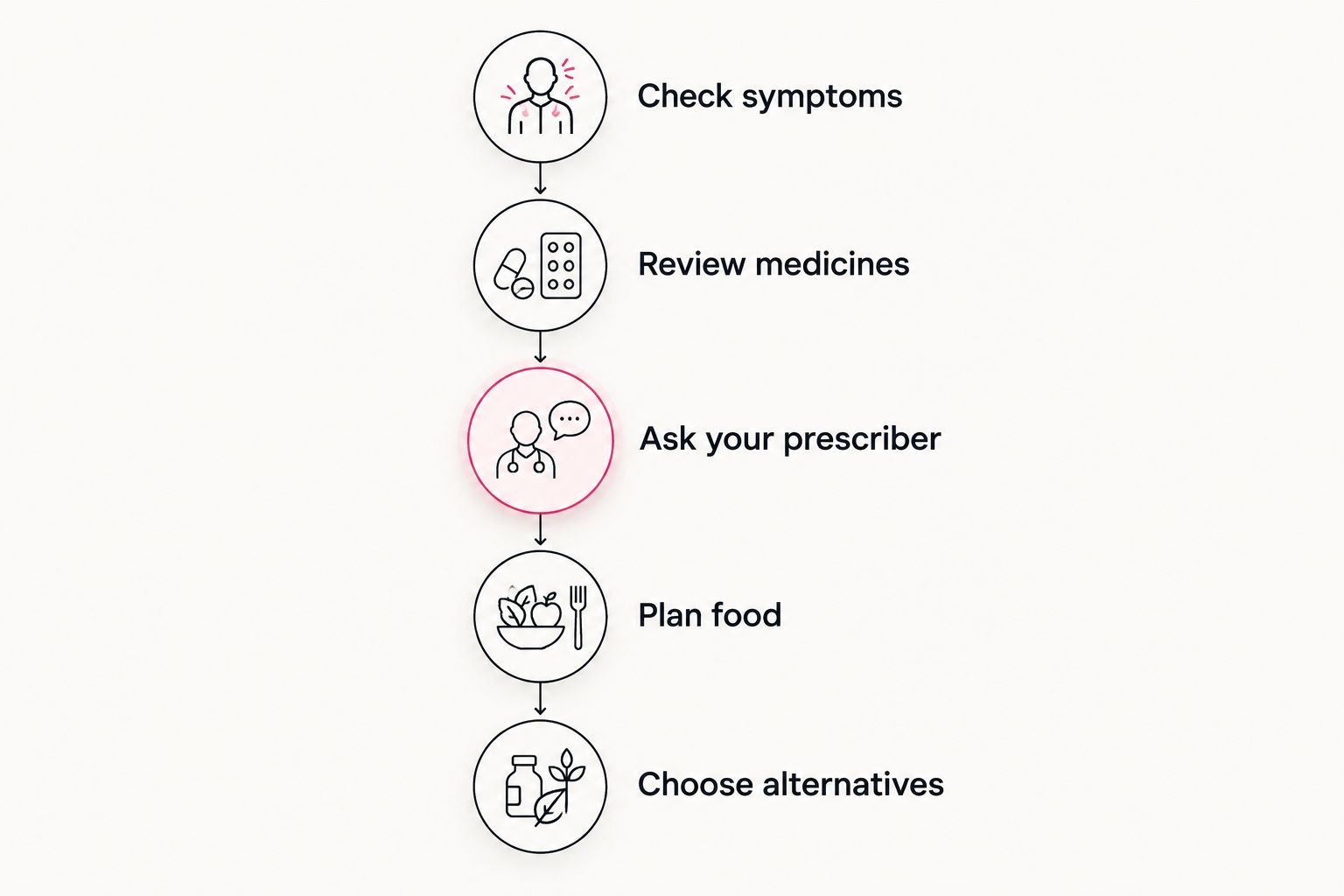
Use this sequence before deciding whether to drink. For your 2026 treatment plan, keep the advice specific to your current prescription rather than carrying forward an old assumption.
- Check symptoms. If you feel nauseated, are vomiting, or cannot eat and hydrate normally, leave alcohol out of the plan.
- Review medicines. Confirm whether insulin, a sulfonylurea, or another prescription changes the advice.
- Ask your prescriber. Describe the occasion, your usual serving size, and any previous reactions to alcohol.
- Plan food. Do not substitute alcohol for a meal; discuss food and glucose monitoring if you have diabetes.
- Choose alternatives. Arrange a nonalcoholic option and safe transportation so drinking is not the default.
Even after your clinician agrees that occasional drinking is reasonable, stop if you feel unwell. Previous tolerance does not guarantee the same response after a dose increase, a missed meal, or an illness.
What symptoms mean you should seek medical help?
Severe, persistent abdominal pain needs prompt assessment, especially when it spreads to your back or occurs with vomiting. Pancreatitis is a warning in prescribing information for these medicines; do not assume significant pain is an ordinary side effect or a hangover.
Repeated vomiting, inability to keep fluids down, very little urination, fainting, or marked weakness also require medical advice. Alcohol is not the only possible cause, and delaying evaluation can make the situation harder to manage.
Call emergency services for unconsciousness, seizures, severe confusion, or difficulty breathing. Do not give food or drink to someone who cannot swallow safely, and follow any emergency glucose plan their clinician has provided.
If you drink heavily or regularly, tell your clinician before making a sudden change. Alcohol withdrawal can be dangerous and sometimes requires medically supervised care.
What if you already had a drink?
Having a drink does not automatically mean you have harmed yourself or need to stop treatment. Avoid more alcohol if you feel unwell, do not drive, and follow your usual food, hydration, and glucose-monitoring instructions.
Pay attention to the symptoms above rather than trying to cancel out alcohol with a large meal or extra water. Neither approach reliably reverses intoxication or rules out a medical problem.
Contact your prescriber if you had significant symptoms or are unsure how to handle your next dose. Describe what you drank, when you drank it, your medication, and any other medicines you took; those details are more useful than simply saying you felt bad afterward.
How does alcohol fit into medical weight loss?
Alcohol contributes calories without replacing the nutrition you need from food. When appetite is reduced, making room for protein, fluids, and balanced meals becomes a practical priority.
That does not make drinking a moral issue or turn one evening into a failed treatment plan. The useful question is whether alcohol makes your symptoms, nutrition, or health goals harder to manage.
Skindale Medspa is best suited to Scottsdale clients seeking personalized medical weight loss and wellness care. The benefit is a plan centered on your needs; the limit is that no general wellness recommendation can establish your personal alcohol allowance.
Bring the question up directly. You do not need to wait until drinking causes a problem to ask how it fits your care.
FAQ
Can I have one glass of wine while taking a GLP-1?
One glass of wine is not automatically safe or prohibited; your medication, symptoms, other prescriptions, and health history determine the advice. A large pour can also contain more alcohol than a standard drink.
Should I skip my GLP-1 injection if I plan to drink?
Do not skip or change your prescribed GLP-1 dose to drink alcohol. Ask your prescribing clinician about any scheduling concern.
Can I drink alcohol the day after my weekly injection?
The day after a weekly injection is not an established safe window for drinking. The medicine remains active between doses, and symptoms and other medications still matter.
Is alcohol-free beer a better option while taking GLP-1 medication?
An alcohol-free option avoids alcohol-related effects only if it contains no alcohol. Check the label because some products described as nonalcoholic contain small amounts, and consider sugar content if you manage diabetes.
Why do I feel sick after drinking on GLP-1 medication?
Alcohol can worsen nausea or stomach irritation that you already experience during GLP-1 treatment. Persistent vomiting or severe abdominal pain needs medical assessment rather than an assumption that it is a routine reaction.
Can Skindale Medspa help me discuss alcohol and medical weight loss?
Skindale Medspa offers personalized medical weight loss and wellness care in Scottsdale. Bring your medication list and alcohol questions to a consultation, and confirm prescription-specific advice with the clinician managing your treatment.
One last thing
A single glass is a container, not a dependable measure of alcohol. Learning what is actually in your usual pour can make your next medication conversation more useful than searching for a universal drink limit.
For your next treatment review in 2026, write down your medication, other prescriptions, typical serving, and any symptoms. If you would like support with a personalized medical weight loss plan, you are welcome to schedule a consultation and discuss what fits your health and goals.