

How long does it take to see lip filler results?
You can see added lip volume immediately after treatment, but the first look includes swelling and is not the finished result. For a natural-looking outcome, judge your lips after swelling has settled and your injector has reviewed their shape. This 2026 guide explains what changes during healing, when to assess your results, and which symptoms need prompt attention.
- For how long for lip filler results, Cleveland Clinic distinguishes immediate volume from the later, settled appearance.
- Swelling can change lip shape early; your first-day appearance is not the final result.
- Cleveland Clinic describes a follow-up around two weeks after lip filler to assess healing and results.
- Skindale Medspa offers personalized medical aesthetics for Scottsdale clients seeking natural-looking results.
Why this matters
If you want refreshed lips rather than a dramatic change, the early swelling can feel unsettling. Added fullness, injection-site tenderness, and temporary unevenness can make it difficult to judge the treatment while your lips are healing.
Do not use your first-day appearance to decide whether you need more filler. A settled result and a clinical review provide a better basis for that decision than a close-up photograph taken immediately after treatment.
Skindale Medspa is best suited to Scottsdale clients seeking personalized medical aesthetics and wellness care. You can explore Skindale Medspa when planning a conversation about your goals and treatment options.
How long does it take to see lip filler results?
Lip filler changes volume immediately, while swelling temporarily changes the appearance around that volume. Cleveland Clinic’s patient guidance, Lip Fillers, describes swelling that usually resolves within 24–48 hours, although it can take up to one week. It also describes a follow-up appointment about two weeks after treatment to examine the lips and discuss the result.
These are general healing checkpoints, not a promise that every person will look settled on the same day. For your 2026 treatment plan, use your injector’s instructions and scheduled review rather than treating an online timeline as a deadline.
| Stage | What you can see | What to do |
|---|---|---|
| Immediately after treatment | Added volume alongside swelling and injection-site changes | Follow aftercare; do not judge the final shape |
| First 24–48 hours | Swelling and tenderness as the lips begin healing | Watch the direction of change and contact your injector about concerns |
| Up to one week | Swelling can still affect your appearance | Avoid deciding on additional filler while your lips remain swollen |
| About two weeks | A clearer opportunity to assess healing, shape, and symmetry | Attend the review your injector recommends |
The main benefit of lip filler is that you do not have to wait for added volume to become visible. The limitation is that this immediate change is mixed with the body’s response to injections. Immediate volume is visible; the finished appearance needs a later assessment.
Immediately: visible volume, not a final verdict
You can notice fuller lips before leaving the appointment. That does not mean every contour you see represents the filler’s settled effect.
Swelling can exaggerate fullness or make one area look different from another. A photograph taken at this stage records your early appearance, not a reliable endpoint for judging balance or deciding on another treatment.
Ask your injector what they expect you to notice as you heal. Knowing the difference between an expected change and a symptom that needs assessment gives you something more useful than repeatedly checking the mirror.
First 24–48 hours: swelling affects the early look
Cleveland Clinic describes 24–48 hours as the usual period for swelling to resolve, with some swelling lasting longer. Your lips can therefore look different as the early reaction settles.
Tenderness or bruising can also influence how you feel about the result. Follow the aftercare instructions you received, and contact your injector if symptoms worsen, concern you, or do not match what they explained.
Up to one week: allow for continued healing
Cleveland Clinic notes that swelling can take up to one week to resolve. That longer window helps explain why an early photograph is not a useful basis for comparing your outcome with somebody else’s.
Do not press, squeeze, or repeatedly manipulate an area to check whether it feels even. If you notice a lump or a difference in shape, describe it to your injector and ask whether they want to examine it.
About two weeks: review the result with your injector
A review about two weeks after treatment is a checkpoint described in Cleveland Clinic’s lip filler guidance. The purpose is to examine healing and discuss the result—not to automatically add more filler.
At your review, explain what you like and what still concerns you. Your injector can assess whether the issue involves residual swelling, placement, your starting anatomy, or a treatment goal that needs further discussion.
Why the lip filler timeline varies
Your lips do not heal according to a calendar alone. The appearance during recovery reflects both the treatment and your individual response.
- Swelling: Temporary swelling changes apparent volume and can obscure the result.
- Bruising: Bruising affects the early appearance even when it does not represent the final shape.
- Starting anatomy: Existing differences between the sides of your lips matter when assessing symmetry.
- Injection sites and technique: Where injections occur influences which areas feel tender or look swollen.
- Individual healing: General guidance does not replace assessment of your own symptoms and recovery.
- The treatment goal: Subtle definition and a noticeable increase in fullness require different conversations about the finished appearance.
For a 2026 consultation, explain the outcome you want in everyday language. Examples include wanting a clearer lip border, more balanced proportions, or gentle fullness without changing your expression.
A personalized plan starts with that goal and your anatomy. It should also include a clear discussion of expected recovery, risks, and how to contact the treating clinician.
How can you tell whether your lips are settling?
Look at the overall direction of healing rather than a single moment. Useful observations include whether swelling is decreasing, whether discomfort is easing, and whether your lips are returning to a more comfortable appearance.
Watch for improvement, but do not diagnose a complication from a photograph. Your injector needs to assess symptoms that are worsening or difficult to interpret.
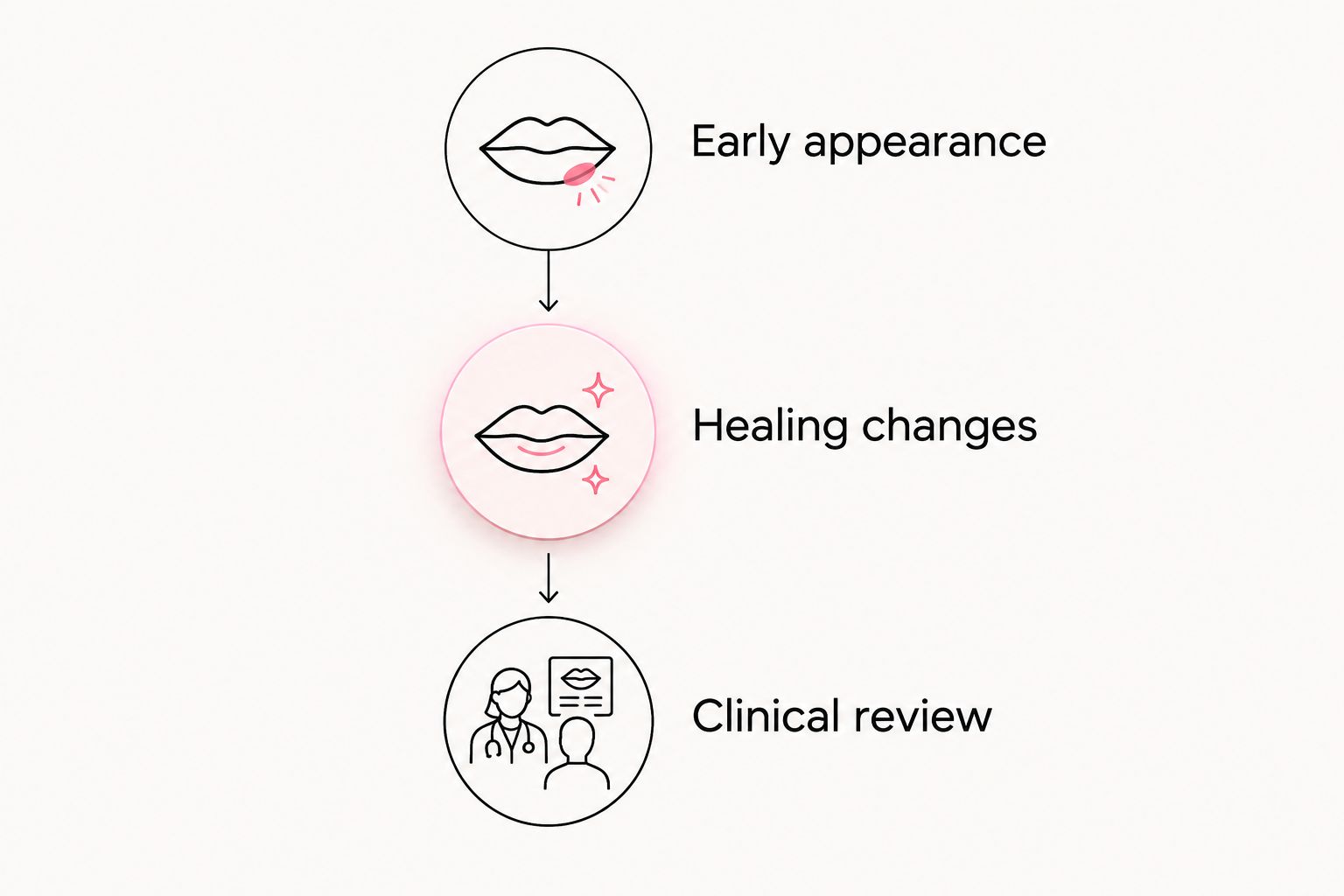
Use this simple sequence to keep the process manageable:
- Early appearance: Recognize that visible volume and swelling are present together.
- Healing changes: Follow aftercare and notice whether symptoms improve or worsen.
- Clinical review: Discuss the settled appearance and any remaining concerns with your injector.
These checkpoints keep you focused on recovery rather than trying to predict the final result from every small change.
Use photographs to communicate, not to self-diagnose
If your injector asks for photographs, use similar lighting, distance, and facial position each time. Keep your lips relaxed so the images provide a more consistent comparison.
Photographs can help you explain a concern, but they do not replace an examination. Tell your injector about pain, temperature changes, skin-color changes, or other symptoms that a picture does not capture.
Avoid deciding on more filler while you are swollen
A swollen lip can make another area seem too small by comparison. Making a treatment decision from that appearance risks basing your goal on a temporary imbalance.
Wait for your injector’s assessment before discussing additional treatment. A natural-looking result depends on proportion and suitability, not simply on adding volume wherever you notice a difference.
What should you do while waiting for the final result?
Follow the aftercare instructions given by the clinician who treated you. They know the treatment details and can explain which activities, products, and habits to avoid during your recovery.
Before you leave the appointment, make sure you understand how to contact the practice with a concern. Ask what warrants a routine message, what needs same-day assessment, and what requires emergency care.
For your 2026 treatment planning, keep these questions together:
- What swelling and discomfort should I expect after this treatment?
- What changes should prompt me to contact you immediately?
- Should I use a cold compress, and how should I apply it?
- Do you want me to avoid pressure or massage on my lips?
- When should I return for an assessment?
- How should I reach you outside regular appointment hours?
Do not copy another person’s massage routine or aftercare instructions. If your lips feel uneven, ask your injector what to do rather than trying to redistribute the filler yourself.
When should you contact your injector urgently?
Severe or increasing pain, unusual skin-color changes, or vision symptoms are not signs to wait out. Contact your injector immediately for concerning symptoms, and seek emergency medical care for vision changes or other emergency symptoms.
The FDA’s dermal filler safety guidance identifies accidental injection into a blood vessel as a serious risk. Possible consequences include tissue injury, vision loss, and stroke; this guidance applies to dermal fillers generally, not just the lips.
This is why a normal healing timeline must never become a reason to delay care. If something feels significantly wrong, seek assessment instead of waiting for the follow-up date.
Routine swelling and a serious complication require different responses. Your clinician should explain that distinction before treatment and provide clear instructions for getting help afterward.
Do lip fillers look good immediately?
Lip fillers show added volume immediately, but that early appearance is not a dependable measure of the finished result. Swelling can temporarily exaggerate fullness or change the outline of your lips.
If your priority is a natural, refreshed appearance, discuss that goal before treatment and revisit it at the clinical review. The immediate photograph should not set the standard for how full your lips must remain.
Is two weeks enough to judge lip filler results?
About two weeks is the follow-up interval described in Cleveland Clinic’s lip filler guidance. It provides an opportunity for your injector to examine healing and assess the appearance more clearly than immediately after treatment.
It is not a universal guarantee that every concern has resolved. If your lips remain swollen, painful, or noticeably different from what your injector expected, ask for an individual assessment.
Should you get lip filler just before an event?
Do not plan around the immediate result alone. Leave time for healing and the follow-up your injector recommends rather than assuming your lips will be event-ready as soon as treatment ends.
Bring your event date to the consultation. Your clinician can discuss a schedule that accounts for recovery instead of treating a general online timeline as a promise.
FAQ
How long for lip filler results to look settled?
Added volume is visible immediately, but swelling affects the early result. Cleveland Clinic describes swelling that usually resolves within 24–48 hours, sometimes taking up to one week, and a follow-up about two weeks after treatment.
Will my lips look bigger right after filler?
Your lips can look bigger immediately because added volume and swelling are present together. The first-day appearance is not the final result.
Is it normal for lip filler to look uneven at first?
Early swelling can make lips appear uneven, but your injector should assess an asymmetry that concerns you. Increasing pain or unusual skin-color changes need prompt attention rather than routine observation.
Can I massage a lump after lip filler?
Do not massage a lump unless your treating clinician specifically instructs you to do so. Contact your injector to explain what you feel and ask whether an examination is needed.
When should I book a lip filler follow-up in 2026?
Follow the schedule your injector recommends; Cleveland Clinic describes a review about two weeks after lip filler. That appointment is for examining healing and discussing the result, not automatically adding more filler.
What symptoms after lip filler need urgent help?
Severe or increasing pain, unusual skin-color changes, and vision symptoms need urgent assessment. Contact your injector immediately, and seek emergency medical care for vision changes or other emergency symptoms.
Can I get more filler if my lips look too small during healing?
Wait for your injector to assess the healed result before deciding on additional filler. Temporary swelling can distort proportions and make early comparisons misleading.
One last thing
The best time to discuss a correction is after an assessment, not after a disappointing selfie. Camera angle, lighting, facial position, and healing can all affect what you think you see.
For a 2026 treatment plan, bring a description of your desired result and ask how your injector will assess it after healing. That conversation keeps the focus on comfortable recovery and natural-looking proportions.
Related guides
When you feel ready, schedule a personalized consultation to discuss your goals, expected healing, and whether lip filler is appropriate for you.