

How many IPL sessions are needed to treat sun damage?
If you want sun spots to look less noticeable, the number of IPL sessions for sun damage should come from a skin assessment, not a fixed package. Your 2026 plan needs to account for the type of discoloration, your skin tone, recent tanning, and how your skin responds; a spot that needs medical evaluation should not be treated as a cosmetic concern first.
- IPL sessions for sun damage should follow a skin assessment, not a preset treatment count.
- Skindale Medspa suits Scottsdale clients seeking personalized medical aesthetics and wellness care.
- IPL treats selected pigmentation concerns; it does not replace evaluation of a changing skin spot.
- Sun protection and response checks belong in your skin rejuvenation plan.
Why this matters
You want a useful answer before committing to treatment. But the number of appointments matters less than whether IPL matches the marks you want treated. Brown spots, redness, and uneven texture are different concerns, even when you notice them together.
Choose an assessment before choosing a session package. Skindale Medspa offers personalized medical aesthetics and wellness care in Scottsdale. Skindale Medspa is best suited to Scottsdale clients seeking personalized medical aesthetics and wellness care.
A helpful consultation connects your concern to a treatment goal: less visible pigmentation, a more even-looking complexion, or a separate plan for texture. That distinction gives you a clearer way to judge progress than simply counting completed appointments.
How many IPL sessions are needed to treat sun damage?
There is no single session count that applies to every person with sun damage. The appropriate plan depends on what is being treated, whether IPL is suitable for your skin, and what happens after treatment. A clinician should explain the proposed course and the reasons for reassessing it.
The practical sequence is straightforward:
- Identify the concern. Point out the specific spots, redness, or areas of uneven tone you want addressed. Ask whether each concern is suitable for cosmetic light treatment.
- Check suitability. Review your skin tone, tanning history, medications, medical history, and previous reactions to cosmetic procedures.
- Agree on the goal. Define what improvement would look like for you, without treating completely flawless skin as the expected outcome.
- Review the response. Let the treated skin recover, then compare the result with the starting appearance before deciding on additional treatment.
An initial treatment plan is a starting point, not a promise. If the response does not match expectations, the next decision is to review the diagnosis and approach—not automatically repeat the same treatment.
For your 2026 consultation, ask for a proposed course, the reason behind it, and the conditions that would change it. You should leave knowing what the treatment targets and how the clinician will decide whether to continue.
Why the number of IPL sessions varies
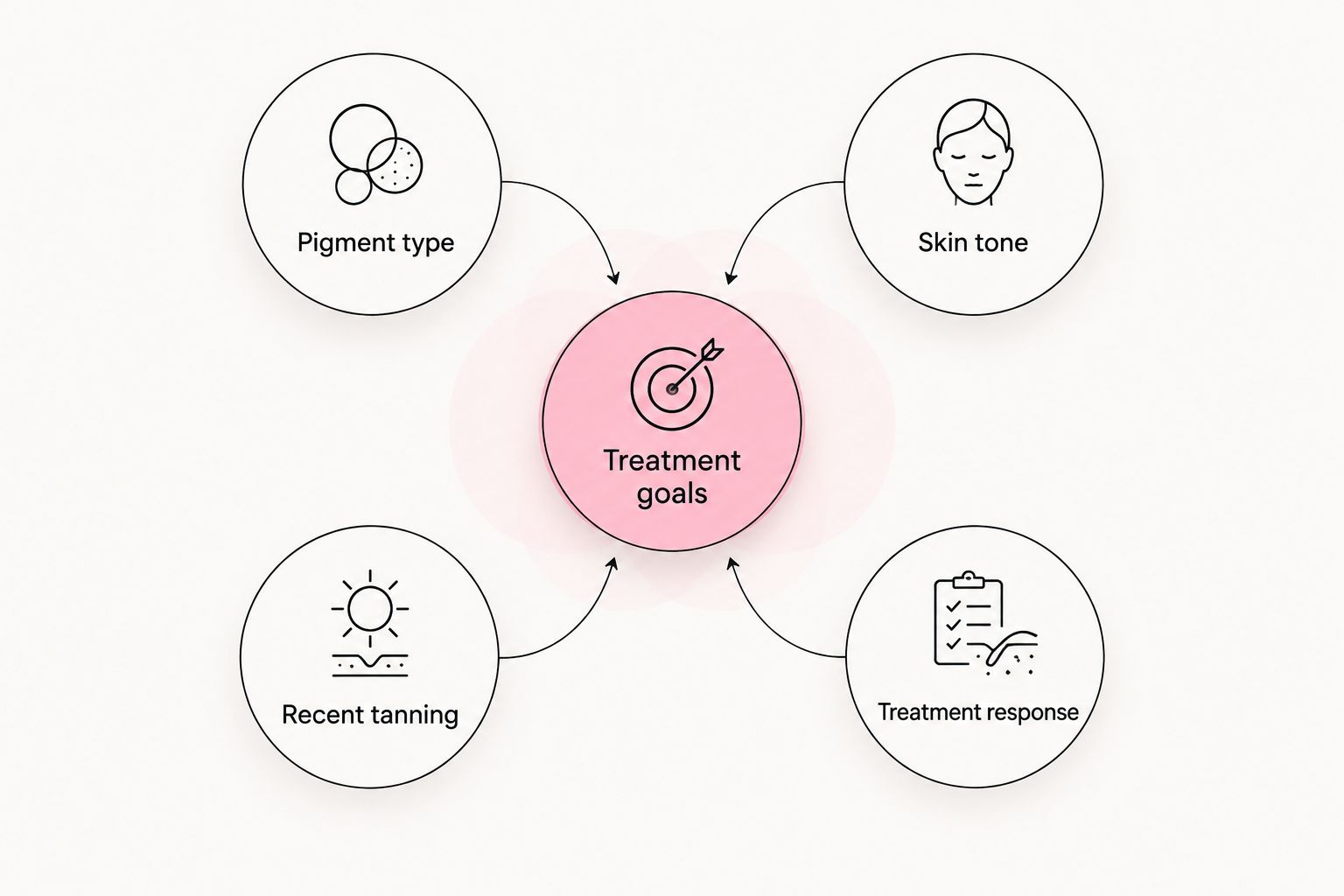
Different skin concerns do not need identical treatment plans. These factors help explain why a session count given to someone else is not a reliable guide for you:
- Pigment type. Sun-related spots are not interchangeable with melasma or other causes of discoloration. Identifying the cause comes before selecting the treatment.
- Skin tone. IPL interacts with pigment, including pigment in the surrounding skin. Suitability and treatment settings need individual assessment.
- Recent tanning. A tan changes the amount of pigment in your skin and can increase the risk of unwanted reactions. Tell the clinician about outdoor exposure and tanning products.
- Treatment response. Changes in pigmentation and skin recovery help guide the next decision. A disappointing result calls for reassessment, not an automatic extra appointment.
- Treatment goals. Reducing the appearance of selected brown spots is different from addressing redness, texture, and fine lines together.
- Sun exposure. Continued ultraviolet exposure contributes to further sun damage. Treatment does not remove the need for ongoing protection.
These factors are reasons for personalization, not reasons to feel discouraged. You do not need to identify your own pigmentation condition before booking an assessment; you need to describe what you notice and share an accurate history.
Is IPL or laser treatment better for sun damage?
IPL and laser treatment are not interchangeable. IPL uses a broad spectrum of light, while lasers use specific wavelengths; the appropriate choice depends on the concern, your skin, and the particular treatment being considered.
Match the treatment to the diagnosis, not to the most familiar name. A comparison is useful only when it includes limitations as well as potential benefits.
| Approach | Best for | Potential benefit | Limitation |
|---|---|---|---|
| IPL | Suitable skin with selected pigment or redness concerns | Can address certain visible pigmentation and vascular concerns | Not suitable for every skin tone or cause of discoloration; burns and pigment changes are possible |
| Laser treatment | Concerns matched to a specific laser and wavelength | Allows treatment selection for a defined pigment or resurfacing goal | Risks, recovery, and suitability depend on the laser and treatment settings |
| Daily sun protection | Everyone seeking to limit further ultraviolet damage | Helps reduce ongoing exposure that contributes to sun damage | Does not remove established spots or replace medical evaluation |
Sun protection supports a treatment plan rather than competing with it. You still need it whether you choose IPL, a laser procedure, or no cosmetic procedure at all.
If texture is your main concern, say so explicitly. A treatment selected for brown spots should not be presented as a complete answer to every visible effect of sun exposure.
What should you tell your clinician before IPL?
A useful consultation includes more than a quick look at the area. Your history helps the clinician assess whether light treatment is appropriate and whether preparation or a different approach is needed.
Bring a medication and supplement list, and mention prescription skin products. Share previous pigment changes, reactions to procedures, and any history of skin conditions affecting the treatment area. Do not stop prescribed medication on your own to prepare for an appointment.
For a 2026 treatment plan, describe your actual routine rather than your ideal one. Outdoor work, exercise, travel, and tanning habits all belong in the conversation. A realistic plan accounts for the exposure you can reasonably manage.
Ask these questions before agreeing to treatment:
- What do you think is causing the discoloration?
- Which of my concerns will IPL address, and which need another approach?
- What risks apply to my skin tone and history?
- What preparation and aftercare should I follow?
- What would make you postpone treatment or change the plan?
- How will we decide whether another session is appropriate?
You should understand both the intended benefit and the possible downside. Clear explanations are part of informed decision-making, not an optional extra.
What happens between IPL appointments?
Between appointments, follow the treating clinician's instructions and allow the skin to recover before judging the result. Treated pigmentation can temporarily darken, and redness or swelling can occur. Your clinician should explain the expected course for the treatment you receive.
Do not pick at treated spots or add exfoliating products because the skin looks uneven during recovery. Ask when to restart active skincare, rather than assuming your usual routine is appropriate immediately afterward.
Photographs taken under similar lighting can help you compare changes. Keep the angle, distance, and makeup consistent so the comparison reflects your skin rather than a different camera setup.
The response review should answer a specific question: did the intended concern improve without an unacceptable reaction? If not, ask for reassessment before scheduling more of the same. Completing a package is not a clinical reason to continue treatment.
How should you protect your skin during a treatment plan?
Sun protection is part of managing sun damage, not just a preparation step before IPL. Use shade, protective clothing, and sunscreen together, and follow the product directions for application and reapplication.
Tell your clinician if you become sunburned or noticeably tanned before an appointment. The safe next step is to contact the practice, not conceal the exposure or assume treatment settings will compensate for it.
When planning appointments in 2026, include outdoor events and travel in the discussion. The goal is a schedule you can follow safely, with clear instructions for what to do if your circumstances change.
Do not use cosmetic treatment as permission to relax sun protection. Treating existing pigmentation does not prevent ultraviolet exposure from affecting your skin again.
When does a sun spot need medical evaluation instead?
A new, changing, bleeding, or otherwise concerning spot needs medical evaluation before cosmetic treatment. Do not assume every brown mark is harmless simply because it appears on sun-exposed skin.
IPL is not a substitute for diagnosing a skin lesion. If a clinician recommends a dermatology assessment first, complete that assessment before pursuing cosmetic improvement in the area.
This distinction protects your health and keeps the treatment goal clear. Cosmetic care addresses appearance only after the concern has been appropriately evaluated; it should not obscure a spot that needs diagnosis.
Can one IPL session be enough?
One IPL session is not a reliable promise of complete improvement. A single appointment can produce a visible response, but the decision to stop or continue should depend on the result, recovery, and your original goal.
Ask what improvement the clinician expects to assess after the initial treatment. If your goal has been met, more appointments are not automatically necessary; if it has not, the next step is a review of the response and treatment choice.
Will sun spots come back after IPL?
IPL does not prevent future sun damage. Continued ultraviolet exposure can contribute to new pigmentation, and the cause of the original discoloration still matters when discussing recurrence.
Ask whether follow-up treatment would address returning pigmentation or a separate concern. Do not treat ongoing appointments as inevitable without an explanation of what each appointment is meant to accomplish.
FAQ
How many IPL sessions for sun damage should I book?
Book a skin assessment before committing to a fixed number of IPL sessions for sun damage. The treatment course should reflect the diagnosis, skin tone, exposure history, and response.
Can I get IPL if I have darker skin?
Darker skin requires careful assessment before IPL because surrounding skin pigment also absorbs light. Ask a qualified clinician whether IPL or a different approach is appropriate for your skin.
Does IPL work for every brown spot?
IPL does not treat every cause of brown pigmentation appropriately. A clinician should identify the concern, and a suspicious or changing spot needs medical evaluation before cosmetic treatment.
Is IPL better than laser treatment for sun damage?
Neither IPL nor laser treatment is universally better for sun damage. The diagnosis, skin tone, treatment goal, and specific device determine which approach fits.
Can I have IPL after getting a tan?
Tell your clinician about a recent tan before having IPL. Additional skin pigment changes the safety assessment, and the clinician should decide whether to postpone treatment.
What should I do if my skin reacts badly after IPL?
Contact the treating clinician promptly if you develop blistering, severe pain, or another unexpected reaction after IPL. Follow their guidance rather than treating the reaction with new skincare products.
Do I still need sunscreen after IPL?
You still need sun protection after IPL because treatment does not prevent further ultraviolet damage. Combine sunscreen with shade and protective clothing, and follow your clinician's aftercare instructions.
One last thing
Before your 2026 consultation, choose the concern you most want to improve and write it down in plain language. A specific goal, such as making selected brown spots less noticeable, gives you and your clinician a better basis for decisions than asking for generally younger-looking skin.
Skindale Medspa's medical aesthetics and wellness care centers on personalized plans. If you are considering IPL, schedule a personalized consultation to discuss your skin concerns, suitability, and the next step that fits your goals.
Discuss your skin goals
Explore a personalized approach to your skin concerns in Scottsdale.