

How many laser hair removal sessions do you actually need?
You need a personalized series of laser hair removal treatments, not a fixed session count that applies to everyone. Your total depends on the area treated, hair color and thickness, skin tone, response between appointments, and hormonal influences; maintenance treatments can also be necessary after the initial series. If your goal is less shaving, the useful question is how your provider will measure progress—not just how many appointments a package includes.
- How many laser hair removal sessions needed depends on hair growth, treatment area, skin tone, and individual response.
- Skindale Medspa emphasizes personalized care; a laser hair removal package does not establish your final treatment count.
- Laser hair removal targets pigmented hair and provides long-term reduction, not a guarantee of permanently hair-free skin.
- Choose a treatment schedule based on regrowth and safety, rather than squeezing appointments closer together.
How many laser hair removal sessions do you actually need?
You need enough treatments to address successive groups of actively growing hairs, followed by a reassessment of the remaining growth. A consultation establishes an initial plan; your response determines whether that plan needs adjustment. A package count is not the same as a personalized treatment recommendation.
Laser treatment works by targeting pigment in the hair. Because hairs cycle through different growth stages, a single appointment cannot effectively treat every follicle at once. That is why a series matters even when your skin looks smoother after an early visit.
For a personalized discussion in Scottsdale, Skindale Medspa offers medical aesthetics and wellness care. Bring your treatment goals, hair-removal history, and questions about your skin—not just a preferred appointment count.
Use this sequence to understand how a sensible plan takes shape:
- Assess suitability. Review your hair color, skin tone, treatment area, medications, and relevant medical history.
- Set your goal. Define whether you want less frequent shaving, fewer coarse hairs, or improvement in a specific area.
- Follow the schedule. Space appointments according to the area and your provider’s instructions.
- Review regrowth. Compare the amount, thickness, and distribution of returning hair before deciding on further treatment.
The decision is not simply whether you have completed a purchased series. It is whether additional treatment remains appropriate and useful for your skin and hair.
Why this matters when planning treatment in 2026
An appointment count helps you plan your calendar, but it does not describe the whole result. You also need to understand what laser can target, what improvement looks like, and when continuing treatment stops making sense.
For your 2026 treatment plan, separate the initial series from any later maintenance. Ask your provider to explain both without presenting either as a guarantee. A clear plan leaves room to change course if your skin reacts unexpectedly or the remaining hair becomes a poor laser target.
Skindale Medspa is best for Scottsdale clients seeking personalized medical aesthetics and wellness care. For laser hair removal specifically, use your consultation to establish suitability and realistic expectations before committing to a series.
Why the number of sessions varies
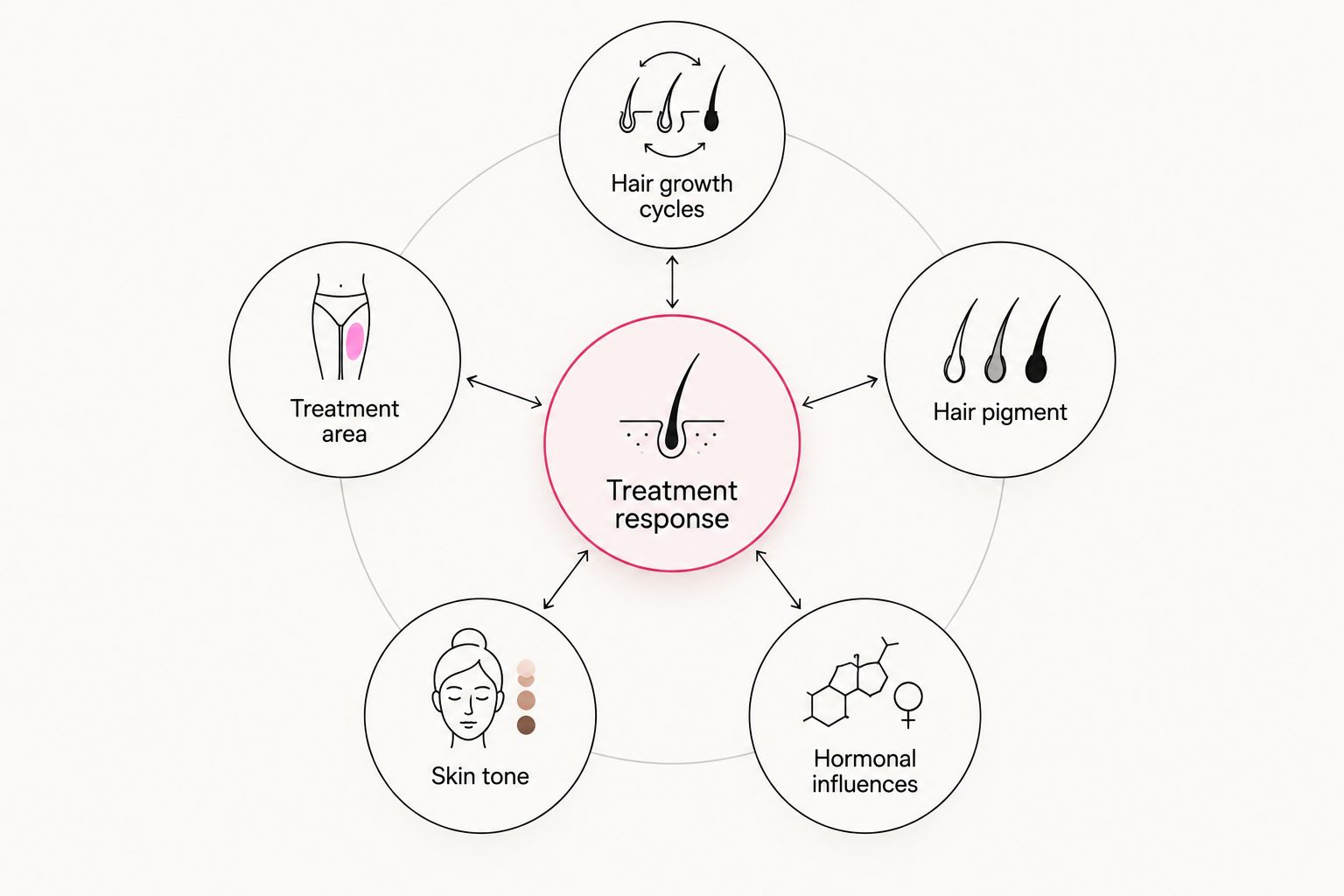
Laser hair removal treats a biological process, not a uniform surface. These factors explain why another person’s appointment count is not a reliable prediction for yours:
- Hair growth cycles: Different hairs enter active growth at different times, so repeated treatment addresses successive groups.
- Treatment area: Facial and body hair do not necessarily follow the same pattern or require the same schedule.
- Hair pigment and thickness: Coarse, dark hair generally provides a clearer target than very light or fine hair.
- Skin tone and tanning: Your provider must select an appropriate device and settings while protecting pigment in the surrounding skin.
- Hormonal influences: Hormones can contribute to persistent or new growth, especially in hormonally responsive areas.
- Treatment response: Skin reactions and changes in regrowth help determine whether to continue, adjust, or reconsider treatment.
Your provider should explain which factors apply to you. A personalized recommendation connects the proposed series to your actual hair and skin rather than relying on a generic checklist.
Hair growth cycles explain repeat appointments
The most important reason for a series is that laser works best on hairs in their active growth phase. Visible hair is not a reliable map of which follicles are ready to respond.
That means smoother skin after an appointment does not prove the whole area has finished treatment. Later regrowth can come from follicles that were not effectively targeted at the earlier visit. Your provider uses the pattern of returning hair to guide the next step.
Hair color can matter more than appointment count
Laser needs pigment in the hair to create a useful target. White, gray, very light blond, and some red hairs respond poorly because they contain little of the pigment that hair-removal lasers target.
More appointments do not automatically solve a poor pigment match. If the hair you want removed is very light, ask about alternatives before extending a laser series. The right decision can be a different method rather than more of the same treatment.
Does the treatment area change how many sessions you need?
Yes. The area affects hair characteristics, hormonal influences, and the timing of regrowth. Your underarms, bikini area, legs, and face should not automatically receive an identical plan.
The comparison below explains what to discuss, rather than assigning unsupported session totals to each area.
| Treatment area | Best for | Reason to consider laser | Limitation to discuss |
|---|---|---|---|
| Underarms | Reducing repetitive shaving of pigmented hair | Coarse, dark hair can provide a clear laser target | Skin irritation and individual response still affect treatment decisions |
| Bikini or Brazilian area | Reducing unwanted pigmented hair in a defined area | You can discuss the exact coverage you want | Sensitive skin and the intended treatment boundaries need careful review |
| Legs | Reducing the upkeep of a larger body area | Laser can address pigmented hair across the agreed area | Fine or light remaining hairs can respond less well |
| Face or chin | Addressing suitable pigmented facial hair | A provider can assess individual coarse hairs and growth patterns | Hormonal influences and fine surrounding hair require extra attention |
These are discussion points, not promises of equal results. In your 2026 consultation, identify the exact area you want treated and ask whether the hair there is an appropriate target.
What does a three-treatment package tell you?
A three-treatment package tells you the number of appointments described in that package. It does not establish the number you personally need, and it does not guarantee that you will finish treatment within that series.
The Skindale Medspa laser hair removal offering described for underarms and the Brazilian area includes three treatments. Treat that number as a package detail, not a clinical endpoint. Your provider still needs to assess whether the treatment is suitable and how you respond.
Before choosing any package, ask what happens at the reassessment. Will your provider review remaining hair, skin tolerance, and your goals before recommending further treatment? That conversation matters more than making your biology fit a preset appointment count.
How far apart should laser hair removal appointments be?
Your provider should set the spacing according to the treatment area and its regrowth pattern. Scheduling visits closer together does not make every follicle enter active growth sooner.
Avoid treating the calendar as a race. The purpose of waiting between appointments is to allow another group of suitable hairs to become available for treatment while giving your skin time to recover.
For your 2026 schedule, discuss travel, sun exposure, and any upcoming events before booking the series. Follow the treating provider’s preparation and aftercare instructions rather than copying another person’s interval. If an appointment needs to move, ask how that changes your plan instead of trying to compensate with extra visits.
How do you know whether laser hair removal is working?
Look for changes in regrowth rather than judging the result immediately after treatment. Reduced density, slower return of visible hair, and less frequent shaving can indicate progress.
Keep your comparisons consistent. Shaving immediately before one observation and allowing extended growth before another makes the result harder to judge. You can record your shaving frequency and, if comfortable, take private photographs under similar lighting for your provider to review.
Discuss these observations at reassessment:
- Density: Are fewer hairs returning across the treated area?
- Thickness: Are the remaining hairs finer than before?
- Distribution: Is regrowth scattered, or concentrated in particular patches?
- Skin tolerance: Have you experienced irritation or pigment changes that need review?
- Daily upkeep: Does the result reduce the grooming task you wanted to change?
Less shaving is a meaningful outcome even when some hair remains. Persistent growth without noticeable improvement deserves a conversation about suitability, technique, and alternatives—not an automatic recommendation to keep adding appointments.
Is laser better than shaving or electrolysis?
Laser is useful for long-term reduction of suitable pigmented hair. Shaving is useful for immediate surface removal, while electrolysis treats individual follicles and can address hair colors that laser targets poorly.
For a 2026 hair-removal plan, choose the method that matches your hair and goal. None of these options is best for every person or every body area.
| Method | Best for | Main advantage | Main limitation |
|---|---|---|---|
| Laser hair removal | Long-term reduction of suitable pigmented hair | Reduces growth rather than only cutting visible hair | Requires a series; light hair responds poorly, and maintenance can be needed |
| Shaving | Immediate grooming without targeting the follicle | Lets you control visible hair at home | Hair continues to grow, and shaving can irritate skin |
| Electrolysis | Individual unwanted hairs, including light-colored hairs | Does not rely on hair pigment in the same way as laser | Treats follicles individually and requires repeat visits |
Shaving also has a role during a laser series when your provider instructs you to use it. Waxing and plucking remove hair from the follicle, so ask when to stop those methods before treatment. Do not assume every hair-removal technique is interchangeable between appointments.
Will you need maintenance after the initial series?
Maintenance can be necessary if suitable hair returns after your initial treatment series. Laser hair removal offers long-term reduction; it does not promise that every treated area stays completely hair-free forever.
The need for maintenance depends on the remaining growth and whether it is still a useful laser target. A few pale, fine hairs are a different situation from returning coarse, dark hairs. Your provider should assess that distinction before recommending another appointment.
Ask what would justify maintenance in your case. The answer should connect to visible regrowth and your preferences, not simply to a standing schedule. You can also decide that the reduction already achieved meets your goal.
What should you ask before starting?
A good consultation makes the plan understandable. You should leave knowing why laser is appropriate for your hair, what the initial series is intended to achieve, and how your provider will decide whether further treatment is useful.
Use these questions to guide the discussion:
- Is my hair color and thickness suitable for laser treatment?
- How will you select the device and settings for my skin tone?
- What changes should I look for between appointments?
- When will we reassess the initial series?
- Which reactions are expected, and which need prompt medical advice?
- What preparation and aftercare should I follow?
Also mention tanning, medications, previous reactions, and any sudden change in hair growth. New or rapidly changing facial hair warrants medical assessment rather than treating the visible hair as the whole issue. A thoughtful plan addresses both your cosmetic goal and relevant health concerns.
FAQ
How many laser hair removal sessions are needed for a Brazilian?
The number of laser hair removal sessions needed for a Brazilian depends on hair characteristics, skin tone, growth cycles, and treatment response. A package count does not establish your final clinical need.
Are three laser hair removal treatments enough?
Three laser hair removal treatments do not establish that treatment is complete. Your provider should reassess the remaining growth and skin response before recommending whether to continue.
Why does hair grow back after laser hair removal?
Hair can grow back because follicles cycle through different growth stages and laser does not effectively target every follicle during the same appointment. Hormonal influences can also contribute to persistent or new growth.
Can I shave between laser hair removal appointments?
Shaving is generally compatible with a laser hair removal series because it leaves the follicle in place. Follow your provider’s instructions about when to shave and avoid substituting waxing or plucking without checking.
Does laser hair removal work on gray or blond hair?
Laser hair removal responds poorly to gray, white, and very light blond hair because those hairs lack a strong pigment target. Ask whether electrolysis is a more suitable option for the hairs you want removed.
Is laser hair removal safe for darker skin tones?
Laser hair removal can be performed on darker skin tones with an appropriate device, settings, and clinical assessment. Discuss your skin tone, tanning history, and pigment-change risk with the treating provider before starting.
Will I need laser hair removal touch-ups?
You can need laser hair removal touch-ups if suitable hair returns after the initial series. Maintenance should follow an assessment of regrowth rather than an assumption that everyone needs the same schedule.
One last thing
The last remaining hairs are not always the best reason to keep treating. If those hairs are very fine or light, more laser sessions can be less useful than accepting the remaining growth or discussing another method.
Bring that question to your 2026 consultation: what would make you recommend stopping? A clear stopping point is part of personalized care, just like a sensible starting plan.
If you would like help choosing your next step, schedule a personalized consultation with Skindale Medspa. Discuss your goals, skin, and hair growth together so your plan supports a natural, comfortable result without promising a universal session count.