

How much downtime should you expect after microneedling?
If you want smoother-looking skin without a long break from your routine, microneedling downtime usually means a few days of visible redness and sensitivity, with some reactions lasting up to a week. Returning to work is different from being ready for makeup, strenuous exercise, or an outdoor event; your clinician’s aftercare instructions determine when you resume each activity.
- Microneedling downtime includes visible redness and sensitivity, not just time away from work.
- The American Academy of Dermatology describes recovery reactions lasting a few days to a week.
- Skindale Medspa is best for Scottsdale clients seeking personalized medical aesthetics care.
- Plan makeup, exercise, and sun exposure around your clinician’s instructions, not your work schedule.
Why this matters
A treatment can fit your work schedule and still conflict with a wedding, a workout, or a day outdoors. The useful question is not simply whether you can leave home afterward. It is whether your planned activities suit skin that is still recovering.
For your 2026 treatment calendar, separate appearance-related downtime from aftercare restrictions. Personalized medical aesthetics care at Skindale Medspa gives you a place to discuss your skin goals and schedule together, rather than choosing an appointment first and fitting recovery around it later.
How much downtime should you expect after microneedling?
The American Academy of Dermatology’s patient guidance describes redness, a sunburn-like feeling, discomfort, and swelling after microneedling. These reactions generally resolve within a few days to a week. That is a general recovery window, not a promise that your skin will look event-ready on a particular day.
Plan around how your skin feels and what your clinician permits, not just whether redness has faded. Your face can look calmer while remaining sensitive to products, heat, or friction.
The distinction matters most when you have a public-facing job or an important event. A quiet day at a desk places different demands on healing skin than a day spent outside, wearing makeup, or exercising intensely.
| Activity | Best for | Practical advantage | Recovery limitation |
|---|---|---|---|
| Quiet desk work | People whose work does not require makeup or outdoor exposure | Easier to keep your routine simple | Redness and sensitivity can still be visible or distracting |
| Public-facing work | People who can accept temporary visible redness | Work does not automatically require bed rest | Makeup restrictions can affect how comfortable you feel returning |
| Outdoor activities | People who can postpone prolonged sun exposure | Planning ahead helps protect recovering skin | Sun, heat, and sweating add aftercare considerations |
| Photographed events | People who can schedule treatment separately from the event | Avoids making recovery compete with a fixed appearance deadline | A general healing window does not guarantee camera-ready skin |
These are scheduling comparisons, not medical clearance. Follow the instructions for your actual treatment, even if someone else returned to the same activity sooner.
What does microneedling recovery look like?
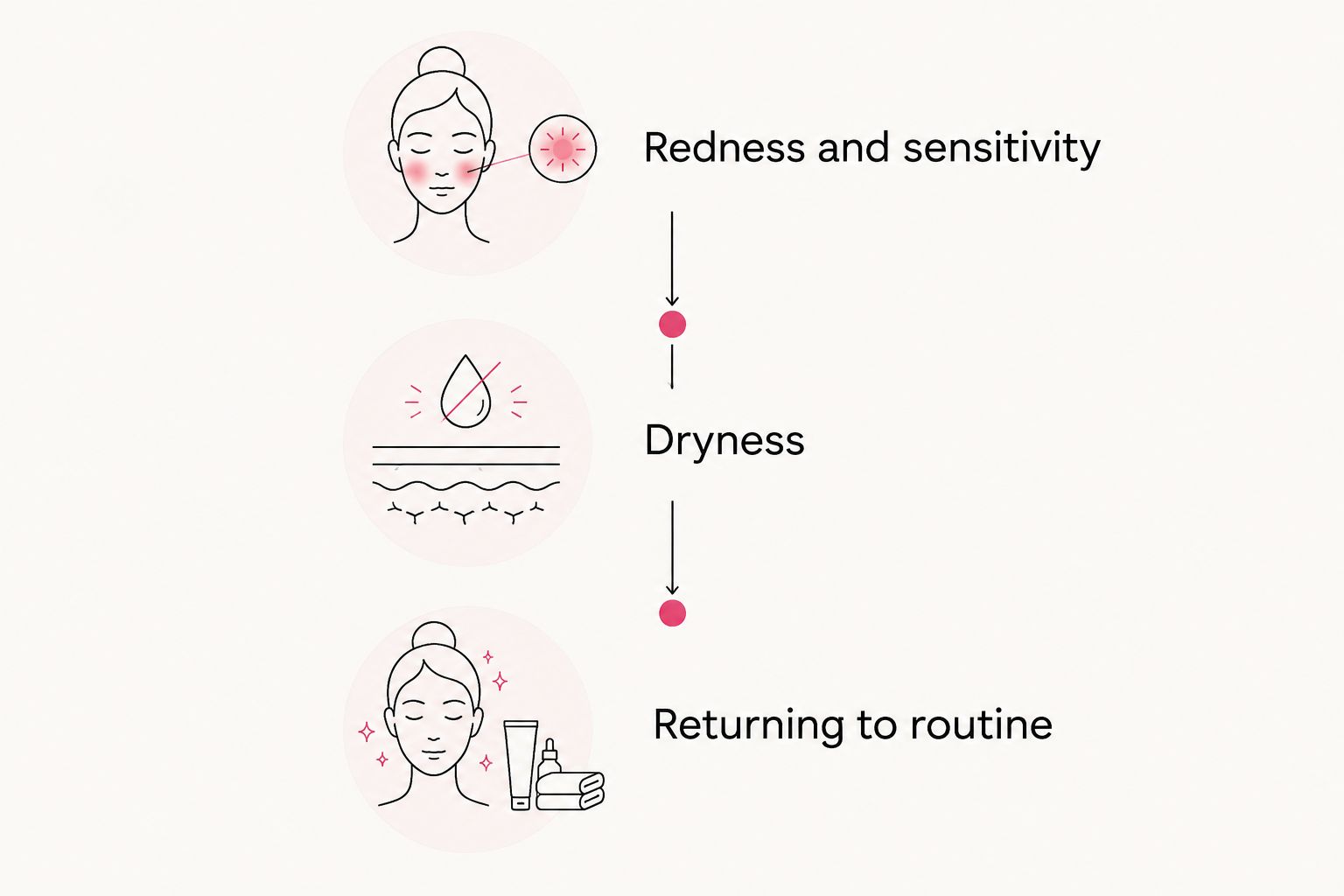
Immediately afterward: redness and sensitivity
Your skin can look flushed and feel warm, tight, or tender after microneedling. The American Academy of Dermatology describes the sensation as similar to sunburn. Some swelling is also possible.
Keep your plans simple. Avoid treating the first evening as an opportunity to try a new serum, scrub, or at-home treatment; use only the products your clinician has cleared.
Visible redness alone does not tell you how deeply your skin was treated. A friend’s milder reaction is not a reason to change your instructions or assume your own recovery is unusual.
During recovery: dryness and changing texture
As your skin recovers, you can notice dryness, roughness, or flaking. Resist the urge to scrub away uneven texture or pick at loose skin. Recovery is not the time to accelerate exfoliation.
Tell your clinician if a recommended product causes persistent discomfort. Do not replace it with an active treatment simply because the alternative usually agrees with your skin.
Returning to your routine: follow clearance, not appearance
Resume skincare, makeup, and exercise according to your written aftercare plan. Looking less red is encouraging, but it is not a substitute for the restrictions you received.
For 2026 scheduling, give yourself flexibility rather than assigning every activity a fixed restart date before your appointment. Ask which activities require a time-based pause and which require your clinician to assess how your skin is healing.
Why microneedling downtime varies
A recovery estimate is useful only when it matches the treatment you receive. Ask your clinician to explain the factors that affect your plan rather than relying on a general social-media timeline.
- Treatment depth: Microneedling settings affect how the skin is treated. Your recovery instructions should match the procedure, not just its name.
- Treatment area: Instructions for your face do not automatically apply to every other area. Confirm which areas need particular care.
- Your skin’s condition: Active irritation, certain skin conditions, and a history of healing problems belong in the pretreatment discussion.
- Other treatments or products: Additional procedures and products can change the aftercare plan. Ask about the whole appointment, not only the needling portion.
- Your daily activities: Heat, sweating, sun exposure, makeup, and friction affect how easily you can follow aftercare, even when they do not change your work schedule.
These factors explain why a personalized estimate is more useful than the shortest recovery claim you can find. Choose the plan that suits your skin and your calendar, not the plan that promises the least interruption.
How should you plan work, makeup, and exercise?
Use this sequence before booking a 2026 appointment. It turns a broad downtime estimate into practical decisions without assuming that every person needs the same restrictions.
- List fixed commitments. Include work presentations, travel, photographs, outdoor activities, and anything that requires makeup or prolonged heat exposure.
- Describe your normal routine. Tell your clinician about workouts, swimming, skincare actives, and occupational exposure to sun or heat. These details help identify conflicts.
- Request written instructions. Ask when you can cleanse, apply makeup, exercise, and restart each skincare product. Keep the instructions somewhere easy to find.
- Leave room for visible recovery. Do not book treatment immediately before an important event based on another person’s experience. Ask for a scheduling recommendation specific to you.
- Know whom to contact. Confirm how to reach the treating practice if symptoms worsen or you are unsure whether a reaction is expected.
Makeup needs its own restart instruction
Cleveland Clinic’s patient guidance advises waiting at least 24 hours before applying makeup after microneedling. Treat that as general guidance, not permission to override a longer pause in your own aftercare plan.
Makeup is also a practical scheduling issue. If your job requires it, discuss that requirement before treatment rather than assuming you can cover redness the following morning.
Exercise is not the same as ordinary movement
A brief, comfortable walk and a strenuous workout do not expose your skin to the same heat and sweating. Ask specifically about your usual activity, including hot yoga, swimming, and sauna use.
Avoid assigning yourself a universal exercise deadline. Your clinician should connect the restriction to the treatment performed and the condition of your skin afterward.
How do you protect your skin during recovery?
Gentle care is the priority. Follow the cleansing and moisturizing instructions provided by your treating clinician, and avoid adding products because they advertise faster healing or a stronger glow.
The American Academy of Dermatology recommends broad-spectrum, water-resistant sunscreen with SPF 30 or higher for sun protection. After microneedling, ask when and which sunscreen to apply; do not assume every formula is appropriate immediately after treatment.
In Scottsdale, make outdoor plans part of the consultation. Shade and protective clothing help reduce exposure without requiring you to rub extra products onto sensitive skin.
Keep active skincare on the approved schedule
Retinoids, exfoliating acids, and scrubs need a specific restart discussion. A product that worked well before your appointment is not automatically suitable while your skin is recovering.
Bring your product names or photographs of their labels. That lets your clinician give instructions for your actual routine instead of leaving you to interpret broad categories such as gentle or active.
Avoid friction and picking
Treat recovering skin gently when cleansing and drying it. Do not scrub, pick at flaking areas, or attempt another needling treatment at home.
More treatment is not a shortcut to recovery. The immediate goal is to follow the aftercare plan, not to add another intervention while your skin is sensitive.
When should you contact your treating clinician?
Worsening symptoms deserve a call, not another product. Contact your treating clinician for increasing pain, spreading redness, marked swelling, discharge, fever, or other symptoms that do not fit the recovery instructions you received.
Do not use a general downtime article to diagnose a reaction. Your practice needs to know what was performed, when symptoms began, and whether they are improving or worsening.
If symptoms feel severe or you cannot reach the practice, seek medical care. A routine recovery estimate should never delay assessment of a concerning change.
Can you go back to work after microneedling?
Returning to work depends on your duties and aftercare restrictions, not simply on whether you feel well enough to leave home. Desk work without makeup presents fewer practical conflicts than outdoor work or a role involving heat and sweating.
Tell your clinician what a normal workday involves. Ask whether any part of that day needs to change temporarily.
Does less redness mean your skin has finished healing?
Less redness does not establish that every product or activity is safe to resume. Follow the instructions for makeup, exercise, and skincare even when your appearance improves sooner than expected.
This distinction prevents an easy mistake: treating a calmer-looking face as permission to restart everything at once.
Should you book microneedling right before an event?
Do not schedule microneedling immediately before an important event based on a general recovery estimate. Visible reactions can last a few days to a week, and your clinician should recommend spacing for your treatment and skin.
For a 2026 wedding, presentation, or photo session, discuss the event date first. The treatment date should follow from that conversation.
FAQ
How long does microneedling downtime usually last?
Microneedling downtime generally involves a few days of visible redness and sensitivity, with some reactions lasting up to a week according to American Academy of Dermatology patient guidance. Your clinician’s instructions determine when you resume specific activities.
Can I wear makeup the next day after microneedling?
Cleveland Clinic advises waiting at least 24 hours before applying makeup after microneedling. Follow a longer restriction if your treating clinician gives you one, and do not treat the next morning as automatic clearance.
Can I work out after microneedling?
Resume workouts according to your treating clinician’s instructions. Ask about your particular activity because strenuous exercise, swimming, and heat exposure create different aftercare concerns.
What sunscreen should I use after microneedling?
Ask your treating clinician which sunscreen to use and when to start applying it. The American Academy of Dermatology’s general sun-protection guidance recommends broad-spectrum, water-resistant sunscreen with SPF 30 or higher.
Is peeling after microneedling a reason to exfoliate?
Peeling is not a reason to exfoliate recovering skin. Avoid scrubs and picking, and follow your clinician’s instructions for cleansing and moisturizing.
When should I call about redness after microneedling?
Call your treating clinician if redness spreads, symptoms worsen, or you develop increasing pain, discharge, fever, or swelling that concerns you. Do not wait for a general recovery window to end before seeking advice.
Can Skindale Medspa help me plan treatment around an event?
Discuss your event date and skin goals during a personalized consultation at Skindale Medspa. Ask for treatment-specific recovery guidance before choosing your appointment date.
One last thing
The most useful detail to bring to a consultation is not just your skin concern. It is what you need to do afterward: wear makeup, attend a photographed event, work outdoors, or return to a demanding workout.
Skindale Medspa is best for Scottsdale clients seeking personalized medical aesthetics care. Schedule a personalized consultation to discuss your goals, your skin, and a recovery plan that fits your routine without rushing the healing process.