

Is laser hair removal safe for sensitive skin?
Laser hair removal can be safe for sensitive skin when a qualified clinician assesses your skin, chooses an appropriate device and settings, and plans treatment around your reaction history. Sensitive skin does not automatically rule you out, but active irritation, a recent tan, and certain medications can change whether treatment is appropriate. Temporary redness and swelling are common; burns, pigment changes, and scarring are risks to discuss before you proceed.
- Laser hair removal sensitive skin decisions depend on skin condition, pigmentation, device selection, and clinician experience.
- Postpone treatment on irritated or sunburned skin; disclose medications and previous reactions before treatment.
- A test spot helps assess your response but does not guarantee an irritation-free session.
- Skindale Medspa suits Scottsdale clients seeking personalized medical aesthetics rather than a one-size-fits-all treatment plan.
Is laser hair removal safe for sensitive skin?
Sensitive skin needs an individual safety assessment, not an automatic yes or no. Laser hair removal uses light absorbed by pigment in the hair to damage the follicle. Because pigment in your skin also absorbs light, device selection and treatment settings matter.
The American Academy of Dermatology’s patient guidance identifies redness, swelling, and discomfort as common reactions. Its guidance also describes less common complications, including blistering, infection, scarring, and changes in skin color. Those distinctions matter: an expected reaction is not the same as an injury.
For your 2026 treatment decision, separate three questions: Is your skin currently healthy enough for treatment? Is the device suitable for your skin tone and hair? Does the clinician have experience treating skin like yours?
| Consideration | More reassuring starting point | Reason to pause or reassess |
|---|---|---|
| Current skin condition | Intact skin without active irritation | Sunburn, broken skin, infection, or an active rash |
| Reaction history | Previous reactions discussed with the clinician | Unexplained blistering, pigment changes, or severe irritation |
| Sun exposure | Your natural, untanned skin tone | A recent tan or sunburn |
| Treatment planning | Device and settings selected for your skin and hair | The same approach offered without an assessment |
| Aftercare | Clear instructions and a way to report concerns | No explanation of expected reactions or warning signs |
At Skindale Medspa, personalized medical aesthetics is part of the stated approach. A consultation is the place to discuss your sensitivity and ask whether laser hair removal fits your skin, rather than assuming that every laser treatment is interchangeable.
Why this matters
If shaving leaves you itchy, bumpy, or uncomfortable, reducing repeated hair removal can be an appealing goal. That frustration does not establish that laser is the right next step. Razor irritation, eczema, contact allergy, and an active infection need different decisions.
Start with the cause of the sensitivity, not the treatment you hope to book. Describe what happens, where it happens, and what triggers it. A reaction to a fragranced shaving product is different from a history of pigment changes after a skin procedure.
For a 2026 consultation, bring that history alongside your goal. You do not need a dramatic transformation to justify asking for help; less frequent shaving and more comfortable skin are reasonable topics to discuss.
What does sensitive skin mean for your treatment plan?
Sensitive skin is a description of how your skin feels or reacts, not a single diagnosis. Tell your clinician whether you experience burning, itching, redness, dryness, bumps, or rashes. Explain whether these symptoms happen only after hair removal or also with ordinary skincare.
An active condition deserves attention before a cosmetic procedure. If you have eczema, recurrent infections, or another diagnosed skin condition in the treatment area, disclose it before scheduling. Your clinician needs to decide whether to treat, wait, or arrange a medical evaluation.
Your skin tone and your sensitivity are separate considerations. Darker skin is not automatically unsuitable for laser hair removal, and lighter skin is not automatically protected from burns. Experience with your skin tone and appropriate technology matter in both cases.
Hair characteristics matter too. Laser treatment relies on pigment, so very light hair is harder to target. Ask whether your hair color makes you a suitable candidate before accepting a treatment plan.
Laser, IPL, or shaving: which approach fits sensitive skin?
Laser and intense pulsed light, or IPL, are not the same technology. A laser uses a specific wavelength; IPL uses a broader range of light. Neither label alone tells you whether a particular treatment is suitable for your skin.
The comparison below describes general trade-offs, not a recommendation to replace an examination. For sensitive skin, the strongest choice is the one that fits your skin condition and hair characteristics without exposing irritated skin to unnecessary treatment.
| Approach | Best for | Potential benefit | Limitation or concern |
|---|---|---|---|
| Professional laser hair removal | Suitable candidates seeking longer-term hair reduction | Reduces reliance on repeated shaving | Requires careful selection; burns and pigment changes are possible |
| IPL hair reduction | Candidates whose skin and hair fit the specific device | Offers light-based hair reduction without a laser | Device suitability varies; it is not automatically gentler |
| Shaving | People who need a temporary option without light treatment | Does not expose skin to laser or IPL energy | Friction, cuts, and shaving products can irritate skin |
Do not choose IPL simply because it sounds less intense. Ask what the device does, why it fits your skin, and what precautions the clinician recommends. A familiar treatment name is not a substitute for that explanation.
Also distinguish hair removal from facial resurfacing. Both can involve lasers, but they have different targets and treatment plans. A treatment designed to improve facial skin texture is not evidence that the same procedure removes unwanted hair.
Why your skin’s response to laser hair removal varies
Your response depends on more than whether you describe yourself as sensitive. These factors belong in the assessment:
- Current irritation: A rash, sunburn, broken skin, or infection changes the safety decision. Treating already irritated skin is not the same as treating calm, intact skin.
- Skin pigmentation: Skin pigment absorbs light as well as hair pigment. The clinician must account for your natural skin tone and any recent tanning.
- Hair color: Pigment in the hair is the treatment target. Very light hair changes the likelihood that light-based treatment will work.
- Device and settings: Wavelength, energy, and cooling affect how treatment interacts with skin. Settings should follow an assessment, not a generic package.
- Medication and reaction history: Prescription medicines, supplements, topical products, and previous procedure reactions can affect the plan. Give the clinician a complete list.
- Aftercare and sun exposure: Friction, irritating products, and unprotected sun exposure can complicate recovery. Follow instructions specific to the treated area.
You do not need to choose the technical settings yourself. You do need a clear explanation of why the proposed approach suits you. If that explanation is missing, pause before treatment.
How should you prepare for a sensitive-skin consultation?
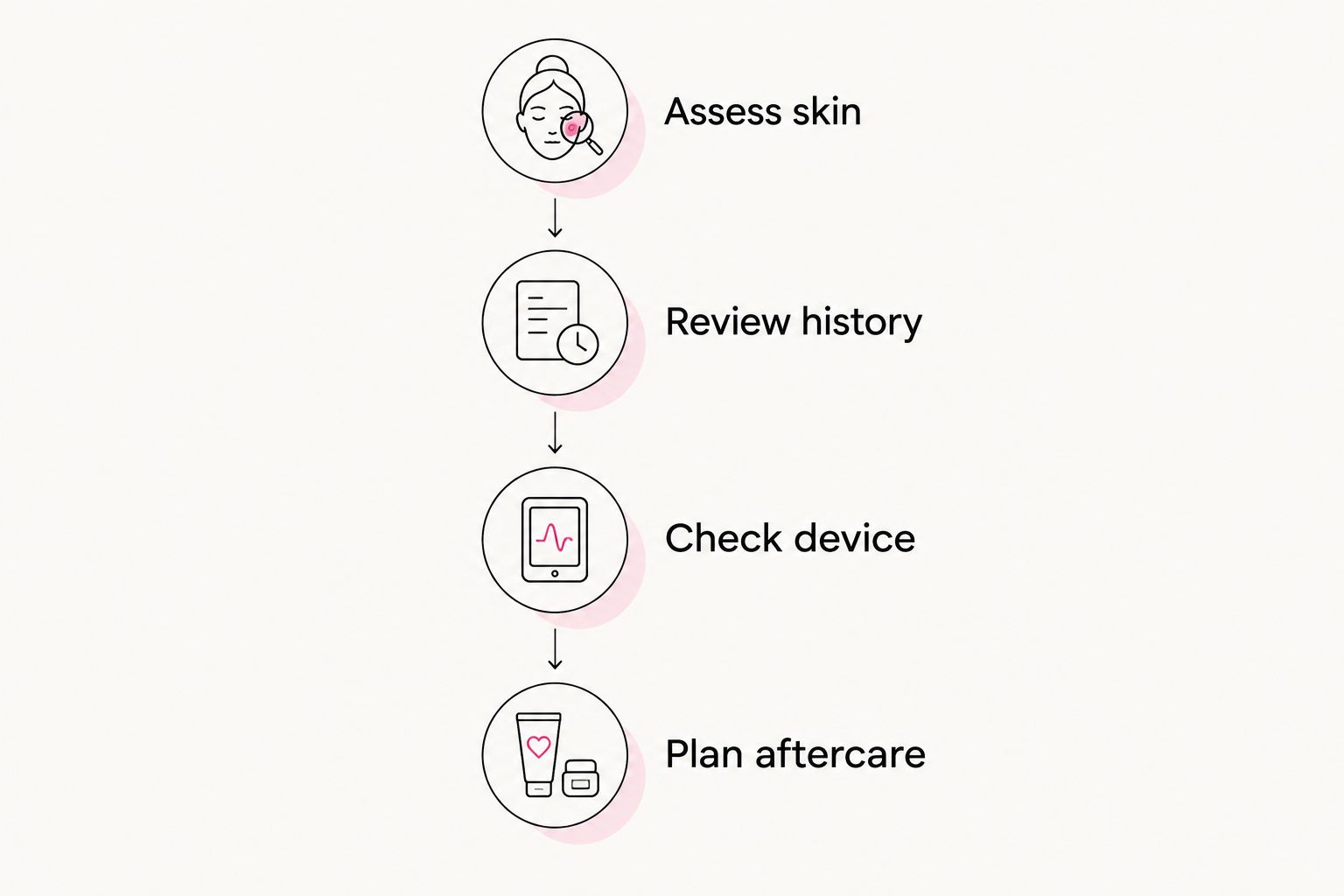
A useful consultation turns a vague label into practical decisions. Use this sequence to prepare for laser hair removal in 2026.
- Assess skin. Note any current rash, cuts, sunburn, tenderness, or unusual bumps. Describe symptoms honestly, even if the skin looks better on the appointment day.
- Review history. Bring your medication and skincare lists. Mention diagnosed skin conditions, previous laser reactions, pigment changes, and any history of unusual scarring.
- Check device. Ask which technology the clinician proposes and why it suits your skin tone and hair color. Ask about experience treating people with similar skin.
- Plan aftercare. Request preparation instructions, expected reactions, warning signs, and a contact route for concerns. Ask whether a test spot is appropriate.
This sequence helps you compare the quality of the treatment plan rather than simply comparing treatment names. A clear explanation should leave you understanding both the intended benefit and the reasons to postpone.
A test spot can help the clinician observe a limited area’s response before broader treatment. It does not guarantee that every area or every later session will respond identically. Ask when the clinician wants to assess the spot and what changes you should report.
Do not stop prescription medication on your own to qualify for treatment. The treating clinician and, when needed, the prescribing clinician should guide that decision.
What should you do before and after treatment?
Follow the treating clinician’s instructions rather than a generic social-media routine. Before treatment, disclose recent sun exposure and ask about shaving, skincare products, and hair-removal methods. Plucking or waxing removes the hair that light-based treatment needs to target.
After treatment, keep the routine simple. Your clinician can advise on gentle cleansing, moisturizing, cooling, and when to resume potentially irritating products. Avoid adding a new exfoliant or fragranced product while your skin is reacting.
Sun protection remains part of the plan. The American Academy of Dermatology recommends broad-spectrum, water-resistant sunscreen with SPF 30 or higher, alongside shade and protective clothing. Ask how to apply that guidance to the treated area.
For your 2026 aftercare plan, get written instructions before you leave. You should know what ordinary redness looks like, which symptoms need a call, and whether exercise, heat, or friction requires temporary adjustment. Do not substitute someone else’s recovery timeline for your own instructions.
Is redness after laser hair removal normal?
Redness and swelling around treated follicles are common after laser hair removal. Sensitive skin can feel uncomfortable, but worsening pain, blistering, or broken skin should not be dismissed as ordinary sensitivity.
Contact the treating clinician if your reaction is stronger than the instructions describe or is getting worse. Seek prompt medical assessment for severe pain, spreading redness, drainage, or other signs of a possible infection.
Can you have laser hair removal if you have eczema?
Eczema does not produce a universal yes-or-no answer. An active flare in the treatment area needs assessment before laser hair removal, and your clinician should consider your diagnosis, current symptoms, and medications.
Do not treat an irritated patch as simply an inconvenience to work around. Waiting until the skin is appropriately assessed is part of safe planning, not a failed treatment decision.
Is at-home hair removal safer for sensitive skin?
An at-home device is not automatically safer because you control it yourself. Many home devices use IPL, and each has specific restrictions for skin tone, hair color, body area, and medical conditions.
Follow the manufacturer’s instructions and do not use a home device on irritated skin. If you have repeated reactions or an uncertain skin diagnosis, get professional advice before experimenting with settings.
FAQ
Can I get laser hair removal if my skin reacts to shaving?
A reaction to shaving does not automatically rule out laser hair removal. First identify whether friction, products, ingrown hairs, or a skin condition is causing the problem, then discuss suitability with a qualified clinician.
What should I tell the clinician about my sensitive skin?
Describe your symptoms, triggers, diagnosed conditions, and previous reactions to procedures. Bring a list of medications, supplements, and topical products, and disclose recent tanning or sunburn.
Is laser hair removal safe for darker sensitive skin?
Laser hair removal can be appropriate for darker sensitive skin when device selection, settings, and clinician experience match the skin being treated. Darker skin is not an automatic exclusion, but pigment-related risks need specific attention.
Does a patch test guarantee I will not react?
A test spot does not guarantee that you will not react. It helps assess a limited area's response and should support, rather than replace, a full skin and medical-history assessment.
Should I stop my skincare before laser hair removal?
Ask your clinician which products to pause and when to restart them. Do not stop prescribed treatment without guidance, and provide the names of products that cause stinging, peeling, or irritation.
What symptoms after laser hair removal need medical advice?
Blistering, severe or worsening pain, broken skin, and signs of infection need prompt advice. Contact the treating clinician rather than assuming these symptoms are normal for sensitive skin.
How do I choose a laser hair removal provider in 2026?
Choose a provider who assesses your skin, explains device suitability, and discusses risks and aftercare before treatment. Ask about experience with your skin tone and how concerns after treatment are handled.
One last thing
A quieter skin reaction is not proof of a better treatment, and a stronger reaction is not proof that treatment worked better. The goal is an appropriate treatment response, not as much redness as you can tolerate.
For your 2026 decision, remember that postponing treatment can be the right recommendation. A careful plan makes room for skin that needs time or medical attention before a cosmetic procedure.
Related guides
If you are considering laser hair removal, schedule a personalized consultation with Skindale Medspa to discuss your skin’s sensitivity, your goals, and whether treatment is appropriate for you.