

Is lip filler painful without numbing cream?
Yes, lip filler is painful without numbing cream: you can feel sharp pinches, stinging, and pressure as the injections happen. The intensity varies by person, and numbing cream does not remove every sensation; some fillers also contain lidocaine, but that does not numb the initial needle entry.
- Is lip filler painful without numbing cream? Yes; expect pinching, stinging, and pressure rather than a pain-free procedure.
- Topical numbing reduces surface discomfort but does not eliminate deeper pressure or every injection sensation.
- Skindale Medspa is best suited to Scottsdale clients seeking personalized medical aesthetics rather than a one-size-fits-all plan.
- Severe or increasing pain, unusual skin discoloration, or vision changes require urgent medical attention.
Is lip filler painful without numbing cream?
Lip filler without topical numbing can hurt, but skipping cream does not always mean receiving treatment without any anesthetic. Your injector needs to explain whether the chosen filler contains lidocaine and whether another numbing method is part of the plan.
The distinction matters. A cream acts at the skin surface, while lidocaine within a filler takes effect after the material is injected. Neither makes the first needle puncture automatically painless.
| Comfort approach | Best for | What it helps with | Main limitation |
|---|---|---|---|
| Topical numbing cream | Reducing surface sensitivity before injections | Discomfort where the needle enters the skin | Pressure and deeper sensations can remain |
| Filler containing lidocaine | Adding local anesthetic during treatment | Discomfort as the anesthetic takes effect | It does not prevent the initial needle-entry sensation |
| Injected local anesthetic | Patients whose clinician recommends additional anesthesia | Numbing a selected treatment area | The anesthetic injection itself can sting and temporarily alter sensation |
| No anesthetic | Patients who choose this after a clinical discussion | Avoiding anesthetic exposure | Injection discomfort remains; it is not a test of toughness |
These approaches are not interchangeable, and clinicians sometimes combine them. Tell your injector about previous reactions to anesthetics before deciding which approach fits your medical history.
Why this matters
If you are considering lip filler in 2026, fear of pain is a useful consultation topic—not something you need to hide. A clear comfort plan helps you understand what you will feel and when to speak up.
Skindale Medspa is best suited to Scottsdale clients seeking personalized medical aesthetics rather than a one-size-fits-all plan. That approach gives you a reason to discuss both your desired appearance and your comfort concerns before choosing treatment.
Pain control and your cosmetic goal are separate decisions. You can want a subtle, natural-looking change and still need careful attention to injection discomfort.
What does lip filler feel like without cream?
Without topical numbing, you can feel the needle entering the skin more distinctly. During an injection, the sensation can shift from a sharp pinch to stinging, pressure, or a feeling of fullness.
Your experience does not have to match someone else's description. A friend calling treatment easy does not tell you how sensitive your lips are or what anesthetic their injector used.
Needle entry
The first puncture is different from the sensation of filler being placed. Even when a filler contains lidocaine, the anesthetic has not already numbed the skin before that initial entry.
If needle entry is your main concern, ask specifically how your injector addresses it. Asking only whether the filler contains lidocaine leaves this part of the experience unanswered.
Filler placement
You can feel pressure as material enters the tissue. Numbing reduces pain signals, but it does not necessarily remove awareness of touch, movement, or fullness.
Feeling pressure does not mean the anesthetic has failed. Tell your injector whether you are feeling pressure, a brief pinch, burning, or escalating pain; those descriptions are more useful than trying to tolerate everything silently.
Tenderness afterward
Lip injections can leave swelling, bruising, and tenderness after treatment. Those effects are different from the brief sensations felt during needle entry.
Your clinician should explain expected recovery and provide instructions specific to your treatment. Severe or increasing pain should not be dismissed as ordinary soreness, especially when it occurs with unusual skin color changes.
Topical numbing cream: less surface discomfort, not zero sensation
Topical anesthetic can make needle entry easier to tolerate. Its effect depends on the formulation, how it is used, and your response, so your injector should direct its application.
The benefit is targeted: less sensitivity at the surface. The limitation is equally important: you can still notice pressure or discomfort beneath that surface.
Do not apply an online numbing product before your appointment unless your clinician explicitly instructs you to do so. Strong topical anesthetics and incorrect application can cause serious adverse effects; using more is not a safe way to improve comfort.
Ask which product will be used, whether it fits your allergy history, and what sensations are expected once it takes effect. These questions are more useful than asking for the strongest available cream.
Lidocaine-containing filler: additional comfort during injection
Some dermal fillers contain lidocaine, a local anesthetic. That can help reduce discomfort during treatment, but the exact filler and your medical history determine whether it is appropriate.
Lidocaine in filler is not a substitute for explaining the first injection. It starts entering the tissue with the filler, rather than preparing the skin before the needle arrives.
You should also understand why the clinician selected that filler for your lips. A product choice needs to fit the treatment area and aesthetic goal, not just an anesthetic preference.
For a 2026 appointment, ask your injector to identify the planned filler and explain its labeling and anesthetic content. Product-specific answers are more useful than a general promise that lip filler will be comfortable.
Injected anesthetic: another option to discuss
An injector can use a separate local anesthetic injection or a nerve block when clinically appropriate. This provides a different approach to numbing than a surface cream.
The trade-off is another injection, which can itself sting. Depending on the method, you can also experience temporary numbness beyond the precise filler injection sites.
This is a clinical decision, not an option every patient needs. Ask why your injector recommends it, what area will feel numb, and what precautions to follow until normal sensation returns.
You do not need to request every available numbing method. You need an approach that suits your health history, comfort needs, and planned treatment.
Why lip filler discomfort varies
Lip filler pain does not have a universal intensity. These factors help explain why two people can describe the same category of treatment differently:
- Lip sensitivity: Your lips have a rich nerve supply, and sensitivity differs between people and treatment areas.
- Anesthetic approach: Cream, lidocaine-containing filler, and separate local anesthesia address discomfort differently.
- Injection technique: Needle entry, tissue movement, and placement can produce different sensations.
- Treatment extent: Treating different areas of the lips changes where you feel injections and pressure.
- Anxiety and prior experience: Anticipation and previous painful procedures can affect how you experience treatment.
- Individual response: People respond differently to anesthetics and to pain itself.
These factors explain variation; they do not predict a personal pain score. Your consultation should turn them into practical questions about what is planned and how the injector will respond if you are uncomfortable.
A universal promise that treatment will not hurt is less useful than an honest explanation. Expect a comfort plan, not a guarantee of zero sensation.
How to discuss comfort before your appointment
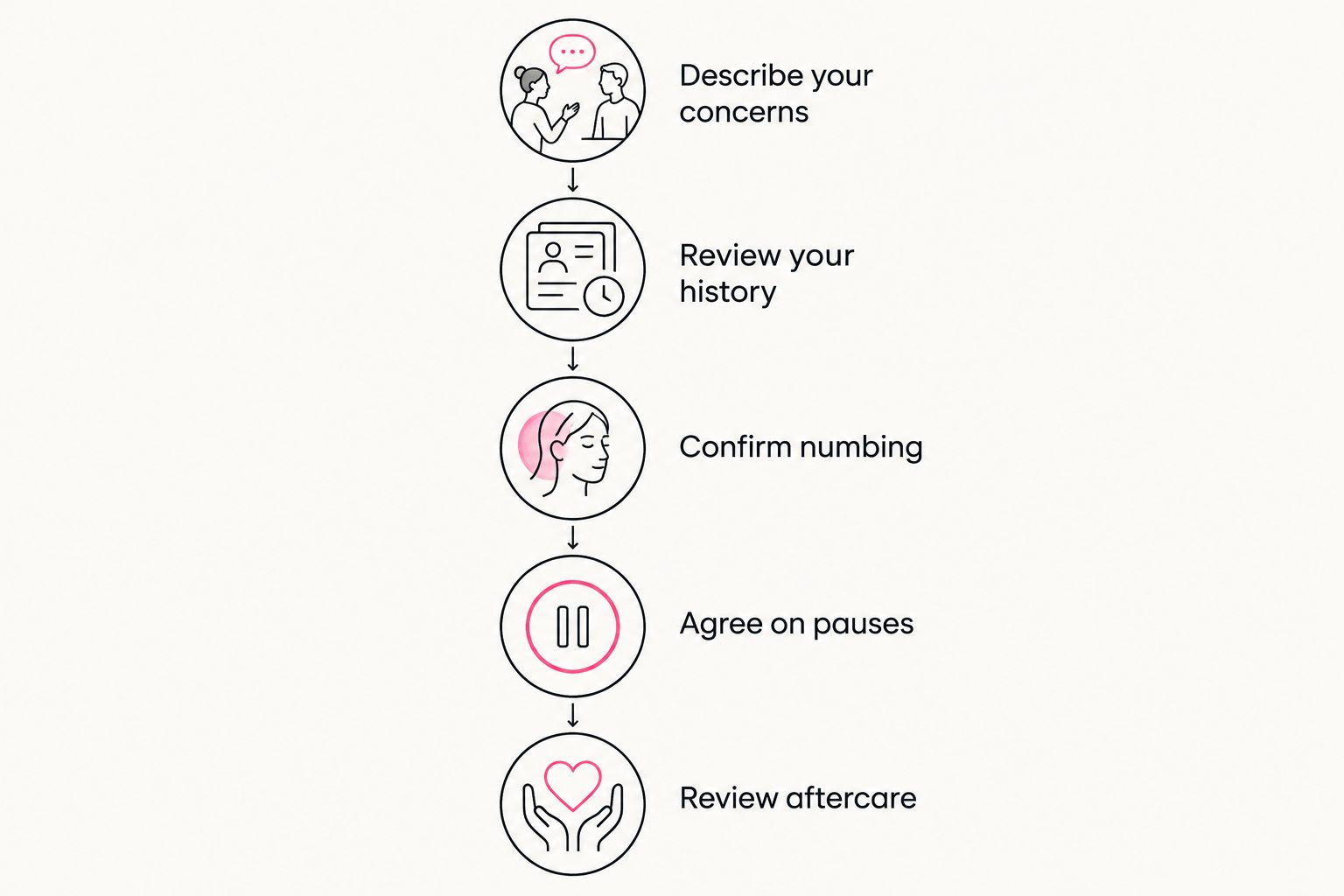
Use your 2026 consultation to agree on a plan before treatment begins. You should leave knowing what will be used, what you are likely to feel, and how to ask for a pause.
- Describe your concerns. Say whether you are worried about needle entry, sustained discomfort, fainting, or a previous difficult experience. Each concern calls for a different conversation.
- Review your history. Share allergies, previous anesthetic reactions, medications, supplements, and relevant medical conditions. Mention any history of cold sores because lip procedures can trigger an outbreak in susceptible people.
- Confirm the numbing plan. Ask whether the plan includes topical cream, lidocaine-containing filler, separate anesthesia, or a combination. Do not assume a method is included.
- Agree on pauses. Ask how you should signal that you need a break. You should not need to move suddenly or wait until discomfort becomes overwhelming.
- Review aftercare. Confirm expected symptoms, whom to contact with concerns, and which symptoms require urgent assessment.
Bring these questions in writing if you tend to forget them once an appointment starts. You can also ask the clinician to repeat an explanation in plain language before you consent.
At Skindale Medspa, the relevant starting point is a personalized medical aesthetics consultation, not selecting treatment from someone else's experience. Ask how your goals for natural-looking lips fit with your comfort preferences and health history.
What should you avoid doing to manage pain yourself?
Do not take a new medicine, apply a numbing product, or stop a prescribed medication solely to prepare for filler without clinical guidance. Your injector needs an accurate picture of what you use and why.
Some medicines and supplements affect bruising or bleeding, but that does not make stopping them on your own safe. Ask the clinician who prescribed a medication before changing it.
Avoid using alcohol to make an appointment feel easier. It can impair your judgment, and informed consent requires a clear understanding of treatment and its risks.
If anxiety is the main obstacle, say that directly. A calm explanation, agreed pauses, and a decision to postpone are better options than trying to manage a medical procedure with unsupervised medication.
When is pain after lip filler a warning sign?
Mild tenderness, swelling, and bruising can occur after lip injections. Severe or increasing pain, unusual pale or mottled skin, or a concerning color change needs urgent assessment. These symptoms can indicate impaired blood flow, a rare but serious filler complication.
Contact the treating clinician immediately if those symptoms occur. Do not wait for a routine follow-up or assume that more numbing will solve the problem.
Vision changes or vision loss after facial filler require emergency medical care. Trouble breathing or swelling affecting breathing also requires emergency care.
Pain is not the only signal to watch. Anesthetic can reduce sensation, so your aftercare instructions should cover skin appearance and other warning signs as well as discomfort.
Before your 2026 treatment, confirm how to reach the clinician for urgent concerns. A clear response plan belongs in the same conversation as the numbing plan.
Can I get lip filler without numbing cream?
Yes, lip filler can be administered without topical numbing cream, but the decision should follow a clinical discussion. You need to know whether another anesthetic will be used and understand that injection discomfort can remain.
Skipping cream is not a measure of courage and does not improve your result by itself. If avoiding cream is important because of a prior reaction, explain the reaction rather than simply requesting no numbing.
Does numbing cream make lip filler completely painless?
No, numbing cream does not guarantee painless lip filler. It reduces surface sensitivity, while pressure, tissue movement, and some injection discomfort can remain.
Ask what your injector expects you to feel and what will happen if you remain uncomfortable. A clear response is more reassuring than a promise that you will feel nothing.
Should I postpone if I am very nervous?
Yes, postponing is reasonable when you do not feel ready or your questions remain unanswered. Lip filler is elective, and you do not need to proceed just because an appointment is booked.
Use the consultation to understand the procedure without committing to injections that day. Your consent should reflect your own goals, not pressure to tolerate discomfort.
FAQ
Is lip filler painful without numbing cream?
Yes, lip filler without numbing cream can cause sharp pinches, stinging, and pressure. Another anesthetic method can reduce discomfort, so ask what the planned treatment includes.
Will I still feel the needle if my filler contains lidocaine?
Yes, you can still feel the initial needle entry because lidocaine in the filler has not numbed the skin beforehand. Your injector can explain whether topical or separate local anesthesia is appropriate.
Is numbing cream better than an anesthetic injection for lip filler?
Neither method is universally better for lip filler. Topical cream reduces surface sensitivity, while injected anesthesia numbs a selected area and requires an additional injection.
Can I put on my own numbing cream before lip filler?
Do not apply your own numbing cream unless your treating clinician explicitly directs you to use it. The formulation and application affect safety, and stronger products are not automatically better.
What pain after lip filler means I should call my injector?
Severe or increasing pain, unusual pale or mottled skin, or concerning color changes require immediate contact with your treating clinician. Vision changes or vision loss require emergency medical care.
What should I ask at a lip filler consultation in 2026?
Ask about the planned filler, anesthetic approach, expected sensations, aftercare, and urgent contact instructions. Also discuss allergies, medicines, previous reactions, and any history of cold sores.
Can Skindale Medspa help me discuss lip filler concerns?
Skindale Medspa offers personalized medical aesthetics care in Scottsdale. Schedule a consultation to discuss your goals, comfort concerns, and whether lip filler is appropriate for you.
One last thing
The most useful question is not simply whether lip filler hurts. It is: what will you do if I am uncomfortable, and how will I recognize a problem afterward?
A good answer separates expected sensations from warning signs and gives you permission to pause. That distinction matters more than someone else's description of a painless appointment.
If you are exploring lip filler in 2026, schedule a personalized consultation with Skindale Medspa to discuss comfort, safety, and the natural-looking result you want. You can make the treatment decision after your questions are answered.