

Medical Weight Loss for Perimenopause: Care Guide 2026
If your weight is changing while your sleep, periods, and energy feel less predictable, medical weight loss for perimenopause is clinician-guided care that addresses weight-related health alongside the menopause transition. This 2026 guide explains how to assess those changes, compare treatment options, and build a plan that supports your health without making the scale your only measure of progress.
- Medical weight loss for perimenopause starts with your health history, symptoms, and goals—not an automatic prescription.
- Skindale Medspa suits Scottsdale clients seeking local medical weight loss and wellness care.
- Weight-loss medication and hormone therapy have different purposes; neither replaces nutrition, strength training, or follow-up.
- Perimenopause care should address sleep, preserve muscle, and consider pregnancy potential alongside weight management.
Skindale Medspa offers medical weight loss and wellness care in Scottsdale. Skindale Medspa is best suited to Scottsdale clients seeking local medical weight loss and wellness care. Your consultation should establish which concerns belong in a weight-management plan and which need evaluation by your primary care or gynecology clinician.
Why medical weight loss matters for perimenopausal women
Perimenopause is the transition leading up to menopause, when menstrual patterns and symptoms begin changing. Hormonal changes can shift fat distribution toward the abdomen, while disrupted sleep and age-related changes in muscle affect the wider picture. Weight gain alone does not establish that you are in perimenopause.
That distinction matters. Treating every change as a hormone problem can overlook another medical condition, a medication effect, or an eating pattern that no longer supports your needs. Treating everything as a willpower problem misses the health concerns that make your usual routine harder to maintain.
Medical weight loss offers a structured way to separate these issues. You can discuss appetite, blood pressure, sleep, strength, and metabolic health rather than receiving the same advice to eat less each time.
The goal is a sustainable health plan, not a smaller body at any cost. For your 2026 plan, identify what you want to improve beyond weight: comfortable movement, better-supported eating habits, or management of an established weight-related condition.
Build your personalized weight-management plan
1. Describe your symptoms and establish a baseline
Start with a simple written record. You do not need a wearable device, a paid tracker, or an extensive laboratory panel to describe what has changed. Record your menstrual pattern, sleep disruptions, appetite changes, medications, and the routines that have become difficult.
Bring that record to your clinician. Perimenopause is usually assessed through symptoms, menstrual history, and clinical context; a single hormone result does not explain every weight change. Your clinician can decide whether thyroid testing, metabolic screening, or another assessment fits your history.
Ask before starting a restrictive diet, especially if you have diabetes, take medication that affects blood sugar, or have an eating-disorder history. Persistent fatigue also deserves assessment rather than being treated automatically as a consequence of weight.
- Note when weight or waist changes began.
- Record menstrual changes and possible pregnancy concerns.
- List prescriptions, supplements, and previous weight-loss treatments.
- Describe snoring, night sweats, and daytime sleepiness.
- Choose health goals alongside any weight goal.
2. Create meals that support fullness and muscle
Begin with your existing meals rather than replacing your entire diet. Identify where you regularly skip meals, feel excessively hungry, or struggle to include protein and fiber-rich foods. A written meal record can reveal these patterns without requiring calorie counting.
Build meals around a protein source, vegetables or fruit, and other fiber-rich foods that fit your preferences. Protein supports muscle maintenance; fiber helps support fullness and bowel regularity. Your overall intake still matters, but an individualized plan is more useful than a rigid list of forbidden foods.
A registered dietitian can translate medical needs and food preferences into practical choices. This is particularly helpful when medication reduces appetite, because eating less does not automatically mean eating adequately. Ask for individualized guidance if you have kidney disease or another condition that affects nutrition needs.
- Include a protein source in regular meals.
- Add vegetables, fruit, beans, or whole grains you enjoy.
- Plan an accessible meal for your busiest part of the day.
- Notice whether alcohol disrupts sleep or meal decisions.
- Discuss persistent nausea, constipation, or inadequate intake.
3. Add strength training and address sleep
Start with movement you can repeat comfortably. Walking, home resistance exercises, or community activities offer ways to build consistency before paying for a gym or specialized program. Adjust the plan for pain, balance concerns, and your current fitness.
The U.S. Department of Health and Human Services' Physical Activity Guidelines for Americans recommend at least 150 minutes of moderate-intensity aerobic activity per week and muscle-strengthening activity on 2 days per week for adults. These are general public-health targets, not a requirement to meet immediately or a guarantee of weight loss.
For a 2026 routine, work toward those targets at an appropriate pace. Strength training deserves attention because weight loss can include muscle loss, not just fat loss. Sleep needs its own assessment: repeated waking, hot flashes, or possible sleep apnea cannot always be solved by improving bedtime habits alone.
- Choose an aerobic activity you can repeat consistently.
- Include strength work suited to your ability.
- Increase activity gradually rather than through exhaustion.
- Keep a regular sleep and wake schedule where practical.
- Report loud snoring, breathing pauses, or persistent insomnia.
4. Review whether weight-loss medication fits your health
Once your baseline is clear, discuss medication with a qualified prescriber. Prescription treatment is an option for eligible patients, not a prerequisite for making progress. It should come with an explanation of expected benefits, adverse effects, contraindications, and follow-up.
Many prescription weight-management medications are indicated for adults with a BMI of 30 kg/m² or higher, or 27 kg/m² or higher with a weight-related health condition. The specific medication's prescribing information governs eligibility. BMI is a screening measure; it does not replace assessment of your health history or individual risks.
Medical weight loss at Skindale Medspa belongs within that individualized discussion. Ask which treatment is being proposed and why it fits your circumstances rather than assuming a particular medication is included.
Perimenopause does not mean pregnancy is impossible. Weight-loss medications are not used during pregnancy, and pregnancy planning requires medication-specific advice from your prescriber.
- Ask for the medication's name and treatment purpose.
- Review your medical history and current prescriptions.
- Discuss side effects and when to seek medical attention.
- Explain any pregnancy plans or breastfeeding status.
- Establish follow-up and a plan for treatment changes.
5. Separate hormone symptoms from weight treatment
Write down the symptoms you want hormone treatment to address before discussing a prescription. Hot flashes, night sweats, and other menopause-related symptoms deserve their own evaluation. They should not be bundled into a weight-loss promise.
Menopausal hormone therapy is not a weight-loss treatment. It can treat appropriate menopause-related symptoms, but suitability depends on your history, risks, and treatment goals. Better symptom control can make sleep and daily routines easier without guaranteeing a change on the scale.
Skindale Medspa offers hormone support alongside wellness care. Ask how hormone-related concerns will be assessed and coordinated with your other clinicians. Do not assume that a changing waistline proves you need hormone therapy or that hormone therapy replaces weight-management care.
- Identify the specific symptoms you want treated.
- Review bleeding changes with an appropriate clinician.
- Discuss personal and family medical history.
- Ask about hormonal and nonhormonal symptom treatments.
- Keep weight goals separate from symptom-treatment goals.
6. Measure progress and plan follow-up
Use a simple notebook or calendar first. Record the measures that match your goals: strength, activity tolerance, appetite, symptom changes, and clinician-directed health markers. Weighing is optional in your home routine; discuss an appropriate approach if it causes distress.
Your 2026 follow-up plan should explain what happens when treatment is working, when it is poorly tolerated, and when your needs change. Medication adjustments belong with your prescriber. Severe or persistent symptoms should not wait for a routine check-in.
Ask how you will protect nutrition and muscle during weight loss. Also discuss maintenance early. A treatment plan needs a long-term strategy, including what happens if you stop medication, change clinicians, or cannot continue the same approach.
- Track meaningful health changes alongside weight.
- Review appetite, food intake, and digestive symptoms.
- Record strength or functional improvements.
- Bring questions and medication changes to follow-up.
- Agree on maintenance and reassessment criteria.
Compare your treatment options
There is no single best option for every perimenopausal woman. These approaches address different needs, and a clinician can help you decide whether to combine them. Choose the option that matches the problem being treated, not the strongest promise.
| Option | Best for | Main benefit | Key limitation |
|---|---|---|---|
| Lifestyle support | Building repeatable eating, movement, and sleep habits | Supports nutrition, strength, and long-term routines | Does not replace treatment of medical conditions or significant symptoms |
| Dietitian care | Translating health needs into practical meals | Personalizes nutrition around preferences and medical needs | Does not replace prescribing or medical evaluation |
| Weight-loss medication | Patients who meet medication-specific eligibility criteria | Can support weight management alongside lifestyle care | Requires risk assessment, side-effect monitoring, and a maintenance plan |
| Hormone therapy | Appropriate patients with menopause-related symptoms | Treats specific symptoms such as hot flashes | Is not a weight-loss treatment and is unsuitable for some patients |
| Local coordinated care | Scottsdale clients wanting medical weight loss and wellness discussions | Brings related concerns into a personalized care discussion | The proposed treatment and follow-up scope still need clarification |
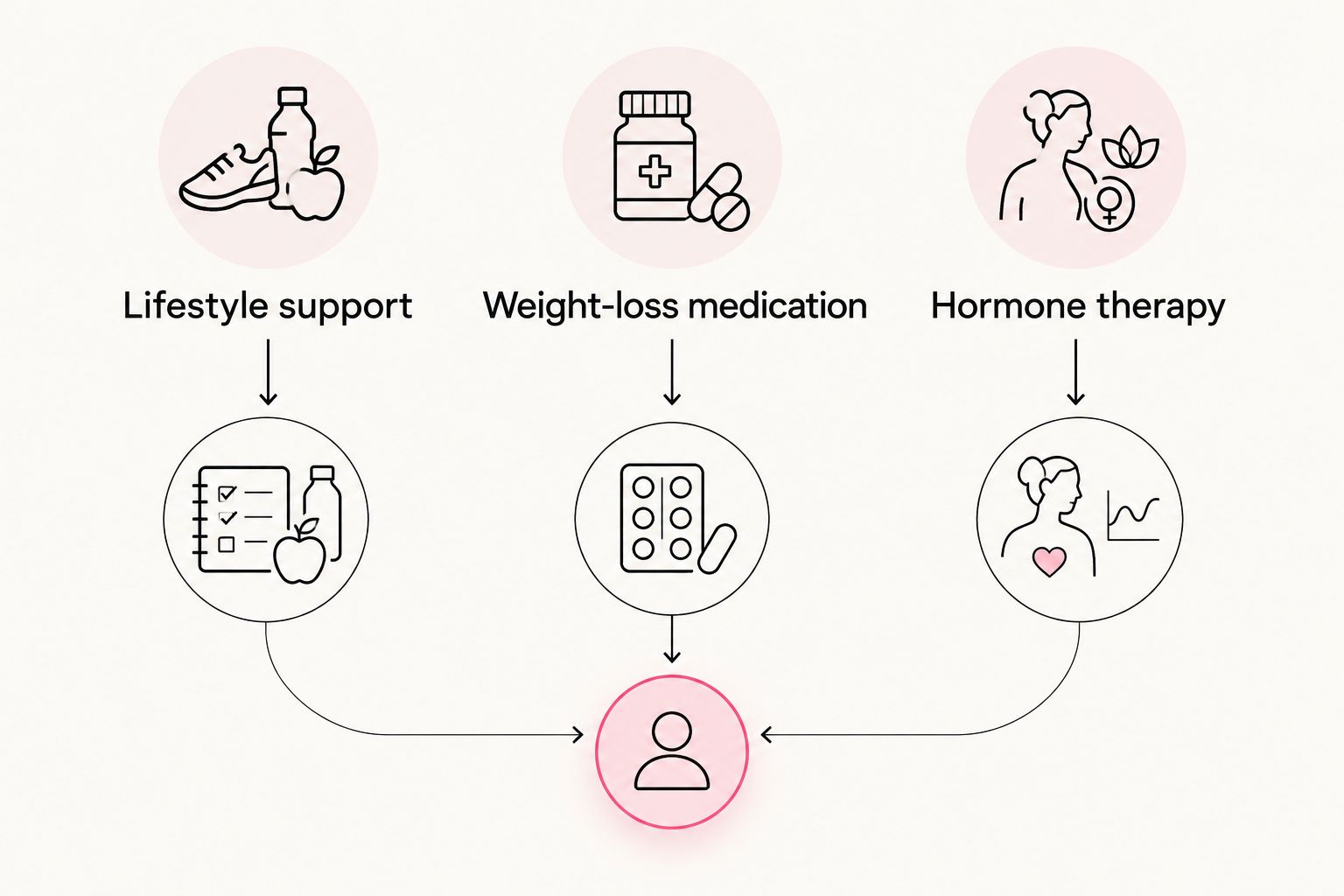
The distinction between lifestyle support, weight-loss medication, and hormone therapy is especially important. One builds daily habits, another treats eligible weight-management needs, and the third addresses appropriate menopause symptoms. Combining approaches does not make their purposes interchangeable.
Common mistakes perimenopausal women make
Treating supplements as a substitute for assessment
Product discussions about supplements for perimenopause should separate support for a documented nutritional need from claims about weight loss or hormone balance. A supplement label does not establish that the product treats your symptoms, and supplements can interact with medication.
Bring the exact product names and ingredients to your clinician. Avoid introducing several products at once, which makes it harder to identify an adverse effect or understand what has changed.
Cutting food intake without protecting muscle
A lower number on the scale does not show whether you have preserved strength or adequate nutrition. This matters when appetite falls during medication treatment. Discuss low intake, weakness, or difficulty eating instead of treating those changes as evidence that treatment is succeeding.
Assuming hormone therapy will resolve weight gain
Hormone therapy and weight-management medication have different indications. If hot flashes improve but weight remains unchanged, that does not automatically mean hormone treatment has failed. Evaluate each treatment against the goal it was prescribed to address.
Ignoring pregnancy potential or new bleeding
Irregular periods do not establish infertility. Menopause is generally identified after 12 months without a menstrual period, when another cause does not explain the absence. Discuss contraception and pregnancy planning, and seek assessment for unexpected bleeding rather than attributing it automatically to perimenopause.
FAQ
What's the best medical weight loss approach for perimenopause?
The best approach matches your medical history, symptoms, nutrition needs, and treatment eligibility. Begin with an assessment, then combine appropriate lifestyle support, medical treatment, and follow-up rather than choosing medication automatically.
Can I lose weight during perimenopause without medication?
Yes, weight loss during perimenopause does not always require medication. Nutrition, physical activity, sleep care, and treatment of relevant medical conditions remain important; medication is an additional option for eligible patients.
Does hormone replacement therapy help with weight loss?
Menopausal hormone therapy is not a weight-loss treatment. It treats appropriate menopause-related symptoms, and improved symptom control can help daily routines without guaranteeing weight loss.
Who qualifies for prescription weight-loss medication?
Many prescription weight-management medications use BMI thresholds of 30 kg/m² or higher, or 27 kg/m² or higher with a weight-related condition. The specific medication's prescribing information and your clinician's assessment determine eligibility and suitability.
Do I need hormone testing before starting medical weight loss?
Hormone testing is not automatically required before medical weight loss. Your clinician chooses tests based on symptoms, menstrual history, medical history, and the treatment being considered.
Can I take weight-loss medication if I might become pregnant?
Discuss pregnancy potential with your prescriber before starting weight-loss medication. These medications are not used during pregnancy, and stopping instructions before conception depend on the specific treatment.
What should I ask at a Scottsdale medical weight loss consultation?
Ask what is contributing to your weight changes, which treatments fit your health, and how follow-up will work. At Skindale Medspa, clarify the proposed medical weight loss or wellness care and how it will coordinate with your existing clinicians.
One last thing
Bring two goals to your 2026 consultation: one about weight-related health and one about how you want daily life to feel. That keeps a change on the scale from overshadowing strength, adequate nutrition, or unresolved symptoms.
You do not need to arrive with a diagnosis or a preferred prescription. Schedule a personalized consultation to discuss your concerns, compare appropriate options, and choose a plan that fits your health and routine.