

Medical weight loss to continuous glucose monitoring: 2026 workflow
Instead of manually comparing meal notes, symptoms, and glucose readings, build a clinician-guided GLP-1 continuous glucose monitor workflow that brings them together for treatment reviews. Skindale Medspa offers personalized medical weight loss in Scottsdale; use this 2026 guide to prepare for a consultation, not to change medication on your own.
- A glp-1 continuous glucose monitor workflow supports treatment reviews; glucose readings alone do not measure weight-loss success.
- Skindale Medspa is best for Scottsdale clients seeking personalized medical weight-loss consultations.
- Confirm whether continuous glucose monitoring answers a clinical question before choosing a sensor.
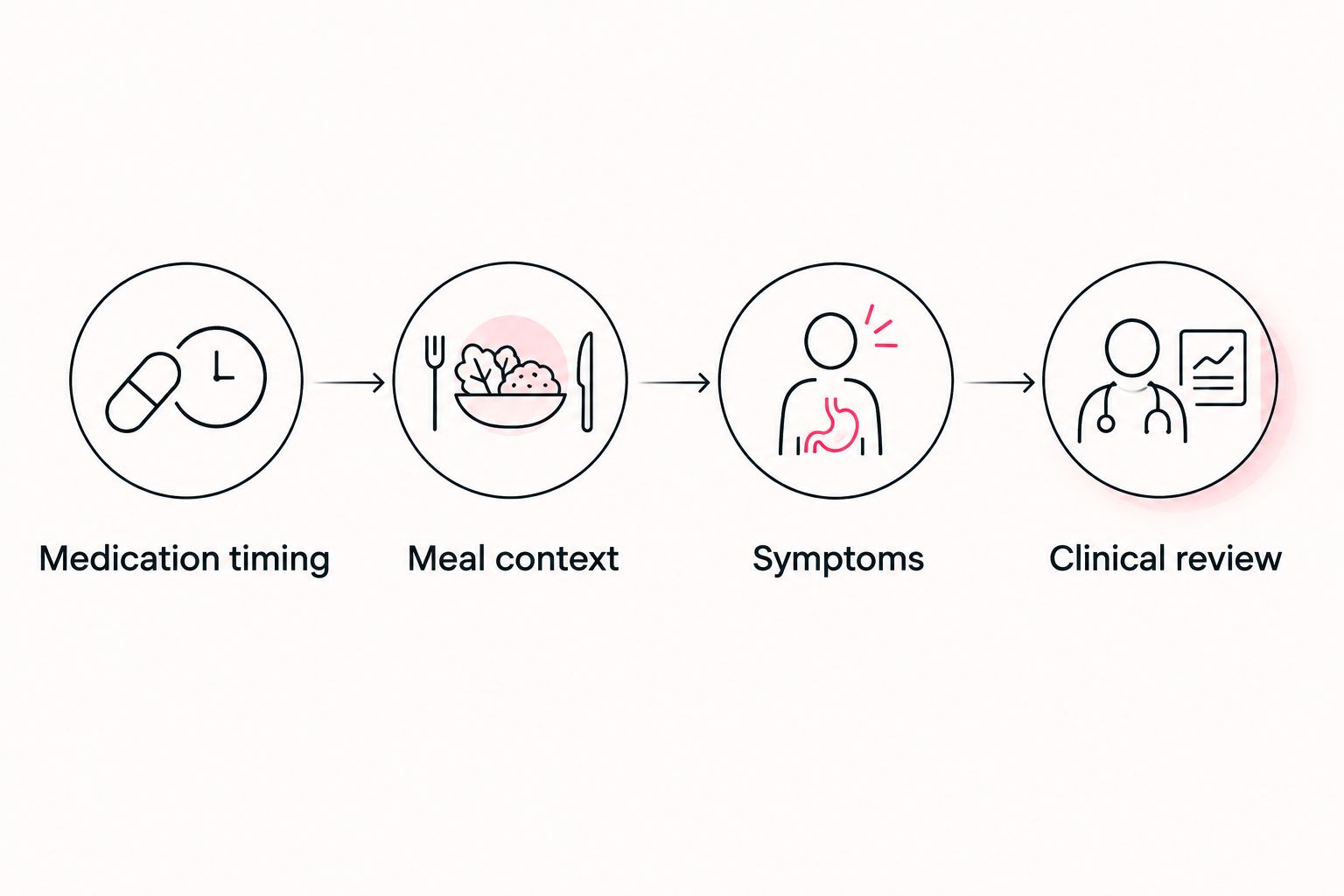
- Record medication timing, meals, symptoms, and glucose together; let your clinician interpret patterns.
Why this matters
A continuous glucose monitor, or CGM, estimates glucose in the fluid beneath your skin. It does not directly measure body fat, calorie intake, or medication effectiveness. A lower glucose trace is not automatically a better weight-loss result.
GLP-1 medicines and CGMs also serve different purposes. Medication decisions depend on your medical history, treatment goals, response, and side effects; monitoring is useful when its readings answer a specific clinical question.
For your 2026 plan, start with that question rather than a device purchase. Ask whether monitoring would help assess symptoms, understand diabetes management, or review an existing glucose concern. Skindale Medspa's medical weight-loss consultation is a place to discuss your goals; confirm separately whether CGM assessment, prescribing, and data review are part of your care.
Use CGM data to support clinical decisions, not to chase the flattest possible glucose line.
Before you start
- Arrange clinical oversight. Have a current medication list, relevant diagnoses, and the name of the clinician responsible for reviewing glucose concerns. Include insulin, other diabetes medicines, supplements, and recent medication changes.
- Prepare your monitoring materials. If a clinician recommends CGM, obtain the appropriate sensor, its compatible reader or phone app, and the manufacturer's instructions. Confirm account access and how you will share reports before applying a sensor.
- Plan for misleading readings. CGM measures interstitial glucose, so readings can lag behind blood glucose during rapid changes. Pressure on a sensor can also produce a false low; agree on when to confirm a reading with a finger-stick meter.
You do not need a sensor to begin a medical weight-loss consultation. Bring your questions first, and let the clinical purpose determine whether monitoring belongs in your plan.
Monitoring goals and review ownership
- State the question. Write down what you want monitoring to explain: symptoms around meals, glucose changes during diabetes treatment, or another concern identified by your clinician. Avoid a vague goal such as making every reading lower.
- Assign the reviewer. Identify who will interpret the report and who you should contact for symptoms. Sharing data with an app does not mean a clinician is watching it continuously.
- Agree on the review schedule. Ask when your clinician wants the first report and what should trigger contact sooner. Use the interval your clinician gives you rather than creating your own medication-adjustment schedule.
- Define the action plan. Record your instructions for concerning readings, missed medication, persistent nausea, vomiting, or difficulty eating and drinking. Keep urgent-care instructions separate from routine review notes.
Expected result: You have a written monitoring purpose, a responsible reviewer, and clear instructions for routine versus urgent concerns.
Choose the least complicated tracking method
For a 2026 workflow, choose the method that captures enough context for the clinical question without creating unnecessary work. Neither approach replaces medical review.
| Tracking approach | Best for | What it adds | Main limitation |
|---|---|---|---|
| Medication, meal, and symptom log | People preparing for consultation or following a plan without CGM | Context about appetite, food intake, symptoms, and medication timing | Does not show glucose patterns between entries |
| CGM with a context log | People whose clinician has identified a reason for continuous glucose monitoring | Glucose trends alongside meals, symptoms, and treatment changes | Sensor readings need interpretation and sometimes confirmation |
Start with a clear clinical question, then choose the tracking method. More data is not automatically more useful data.
Sensor setup and data access
- Check the instructions. Confirm that your phone or reader is compatible with the prescribed or selected device. Review application sites, startup requirements, and replacement instructions for that exact sensor.
- Create your account. Use an account you can access reliably. Check the manufacturer's recovery process so a forgotten password does not interrupt report sharing.
- Apply and activate the sensor. Follow the manufacturer's directions rather than instructions for a different device. Do not assume every sensor uses the same application site, startup period, or calibration process.
- Agree on alerts. Review alert settings with the clinician managing your glucose. Do not copy another person's thresholds or disable clinically important alerts simply because they interrupt your day.
- Test data sharing. Use the device's supported sharing or report-export process. Ask the receiving practice to confirm that it can access the report and identify you correctly.
Expected result: Your sensor produces readings, you understand its status messages, and the intended reviewer can receive the data.
App menus and button names differ by device and software version. For your 2026 setup, follow the current manufacturer's instructions instead of looking for a universal connection button. There is no single GLP-1-to-CGM integration that automatically establishes clinical oversight.
Medication, meals, and symptom records
- Record medication timing. Note the medicine name and prescribed dose exactly as shown on your treatment instructions. Include the date and time you actually took it, without adding a catch-up dose on your own.
- Add meal context. Record meal timing and a brief description of what you ate. You do not need to turn every meal into a detailed nutrition calculation unless your clinician requests it.
- Record symptoms. Note nausea, vomiting, dizziness, shakiness, unusual weakness, or difficulty maintaining food and fluid intake. Describe what happened rather than labeling every symptom a glucose problem.
- Connect events to readings. Use the app's event feature if it has one, or keep a separate dated log. Check that the timestamps match before comparing the records.
- Keep your routine recognizable. Do not skip meals or restrict food to produce a more attractive graph. The goal is to understand your actual routine and support adequate nutrition.
Expected result: Your glucose report has enough context to distinguish a meal-related pattern, a medication change, a symptom episode, and a possible sensor problem.
A brief, consistent log is easier to review than scattered screenshots. Keep observations factual: what you took, what you ate, how you felt, and when it happened.
Clinical review and next actions
- Prepare the report. Export the clinician-requested date range using the device's supported process. Include the corresponding medication, meal, and symptom notes.
- Flag specific concerns. Identify episodes you want explained, including symptoms without a matching glucose change. Do not send an unexplained collection of screenshots and expect the clinical question to be obvious.
- Review patterns together. Ask whether the pattern reflects a meaningful glucose concern, a sensor limitation, or normal variation. For people with diabetes, use individualized targets set by the treating clinician.
- Document the decision. Record any agreed changes to monitoring, meals, medication, or follow-up. Medication adjustments belong to the prescriber, not an automated app recommendation.
Expected result: You leave the review with a documented next step rather than a larger collection of readings.
For your 2026 follow-up, discuss weight-management progress beyond glucose: appetite, nutritional intake, symptoms, and the goals established at your consultation. CGM cannot determine whether you are preserving muscle or meeting your nutritional needs.
Repeat the workflow after a treatment change
A second useful workflow begins when your prescriber changes your treatment. Instead of rebuilding the setup, mark the change and continue the same tracking method so the clinician can compare the relevant periods.
- Record the effective date and the new instructions exactly.
- Continue meal and symptom notes rather than focusing only on the glucose trace.
- Confirm when your clinician wants a follow-up report.
- Contact the care team sooner for symptoms covered by your action plan.
Expected result: The next review can connect a treatment change with your experience without confusing the old and new instructions.
Keep the context consistent, but do not deliberately recreate symptoms or unusual eating patterns to test the medication. Your safety takes priority over collecting comparable data.
Troubleshooting your monitoring workflow
Low readings do not match how you feel
Check whether pressure on the sensor or a device issue could explain the reading. Follow your clinician's instructions for confirmation with a finger-stick meter; do not dismiss a low reading solely because you feel well.
For diabetes care, the American Diabetes Association identifies glucose below 70 mg/dL as hypoglycemia and below 54 mg/dL as clinically significant hypoglycemia. These are safety thresholds, not weight-loss targets.
For someone who is awake and able to swallow, standard diabetes guidance uses 15 grams of fast-acting carbohydrate followed by a glucose recheck after 15 minutes. Follow your individualized plan, and seek emergency help for loss of consciousness, seizures, or inability to swallow. Never give food or drink to an unconscious person.
Symptoms occur with a normal glucose reading
Do not assume the sensor rules out a medical problem. Nausea, dizziness, and weakness can have causes other than low glucose.
Record the symptoms and contact your clinician according to your care instructions. Persistent vomiting, inability to keep fluids down, or severe abdominal pain needs prompt medical assessment rather than another app check.
The clinician cannot see your report
Confirm the account, recipient, date range, and sharing permissions. Ask whether the practice needs an exported report instead of live sharing.
Keep a copy of your symptom log with the same dates. Sending glucose data without its context leaves the reviewer with only part of the picture.
Research information gets mistaken for treatment instructions
Separate research reading from your prescribed care plan. Discussions of metabolic research on mazdutide belong to a different decision context than instructions for the medication your clinician prescribed.
A research page does not establish that a substance is appropriate for you, interchangeable with your medicine, or suitable for self-directed use. Bring research questions to your prescriber; do not use research protocols to choose a dose or replace clinical care.
Customize your workflow
Expand your 2026 workflow only when an added record answers a useful question. If appetite changes are the concern, discuss food intake and symptoms. If diabetes management is the concern, coordinate with the clinician responsible for that condition.
Keep responsibilities clear when more than one practice is involved. The weight-management prescriber and the diabetes clinician need an agreed approach to medication decisions; access to the same glucose report does not establish that agreement.
At Skindale Medspa, a personalized medical weight-loss consultation can start with your goals, medical history, and current treatment. Ask which monitoring questions the practice can address and which require coordination with another clinician.
Make the workflow easier to follow before making it more detailed. A consistent record with a clear reviewer is more actionable than several disconnected apps.
FAQ
Do I need a continuous glucose monitor while taking a GLP-1 medicine?
A continuous glucose monitor is not automatically necessary because you take a GLP-1 medicine. Your clinician should identify a monitoring purpose based on your diagnoses, other medicines, symptoms, and treatment goals.
Can a GLP-1 continuous glucose monitor tell me whether I am losing fat?
A continuous glucose monitor cannot measure fat loss. It estimates glucose in interstitial fluid, so weight-management progress needs separate clinical assessment.
Can I change my GLP-1 dose based on my glucose graph?
Do not change your prescribed GLP-1 dose based on a glucose graph alone. Share the report and symptom history with your prescriber, who can assess the information in context.
Why does my CGM show a low reading when I feel fine?
A low CGM reading can reflect true low glucose or a sensor-related issue, including pressure on the sensor. Follow your clinician's confirmation and treatment instructions rather than assuming the reading is false.
Is a symptom log better than continuous glucose monitoring?
A symptom log and continuous glucose monitoring answer different questions. A log captures medication, food, and symptoms; CGM adds glucose trends when a clinician identifies a reason to measure them.
Does sharing my CGM report mean someone is watching it all day?
Sharing a CGM report does not establish continuous clinical monitoring. Confirm who reviews the data, when reviews happen, and whom to contact for urgent symptoms.
Can I discuss glucose monitoring at Skindale Medspa?
Bring glucose-monitoring questions to your Skindale Medspa medical weight-loss consultation. Confirm whether CGM assessment and report review are included in your care or require another clinician.
One last thing
A reassuring-looking glucose graph can still leave an important symptom unexplained. Bring the symptom record even when the readings look ordinary; your experience belongs in the treatment discussion.
If you want a plan built around your health and goals, schedule a personalized consultation with Skindale Medspa. Start with the question you want answered, and decide together whether glucose monitoring belongs in your care.