

Sol Nutrition supplements to your GLP-1 plan: 2026 workflow
If you're manually trying to fit supplements around a smaller appetite, use a clinician-reviewed routine that starts with meals, checks each supplement label, and tracks tolerance alongside your GLP-1 plan. For sol nutrition glp-1 weight loss searches, the practical answer is to review the exact product with your prescriber—not add a supplement based on its name alone.
- For sol nutrition glp-1 weight loss, review the exact supplement label with your GLP-1 prescriber before adding it.
- Skindale Medspa offers personalized medical weight loss and wellness care for Scottsdale clients.
- Use meals as your foundation; choose supplements for an identified need, not a weight-loss promise.
- Track appetite, digestive symptoms, and new products so your clinician can review the complete routine.
Why this matters
Reduced appetite can make eating feel different during GLP-1 treatment. A supplement routine should support your nutrition needs without adding unnecessary ingredients, digestive discomfort, or confusion about what caused a symptom.
Skindale Medspa is best for Scottsdale clients seeking personalized medical weight loss and wellness care. Start your discussion with Skindale Medspa by bringing your medication list, supplement labels, and the eating concerns you want help addressing.
A useful 2026 workflow separates three decisions: what you need, whether a product fits that need, and whether you tolerate it. These decisions belong alongside your prescribed treatment, not in place of it. A supplement is not a substitute for your medication, an adequate eating pattern, or medical follow-up.
Before you start
- Gather your treatment details. Bring the medication name, prescribed instructions, other medicines, and existing supplements. Include nonprescription products and anything you take only occasionally.
- Bring the actual product label. Save a readable photo of Supplement Facts or Nutrition Facts, the ingredient list, serving instructions, and warnings. A brand name or front-of-package claim does not identify the complete formula.
- Check the non-obvious overlap. A multivitamin, protein product, and separate wellness supplement can contain the same nutrients. Ask your clinician or pharmacist to review the combined amounts before adding another product.
Tell your clinician about allergies, pregnancy or pregnancy plans, kidney disease, and any condition that affects eating or digestion. These details change the review. Do not stop a prescribed medicine or adjust your GLP-1 dose to accommodate a supplement.
Your nutrition baseline
Establish what the supplement needs to solve
- Write down your main concern. Use a specific description: trouble finishing meals, difficulty eating protein-containing foods, constipation, nausea, or uncertainty about a product. Avoid treating all these concerns as the same nutrition problem.
- Describe your usual eating pattern. Record meals, drinks, and foods you skip because they feel difficult to tolerate. Include whether a drink replaces a meal or accompanies one; that distinction helps explain what your routine supplies.
- Ask for a personalized nutrition goal. Your clinician or dietitian should set goals that account for your health, appetite, treatment, and activity. Do not copy someone else's protein target or supplement schedule.
- Identify the gap before choosing the format. Difficulty preparing food calls for a different solution than a diagnosed deficiency. A smaller appetite does not automatically establish a need for a vitamin, mineral, or digestive supplement.
Expected result: You can explain the purpose of any proposed addition in a sentence, such as helping meet a clinician-set nutrition goal. If the purpose remains vague, pause the purchase and clarify the need.
For your 2026 baseline, keep 2 records: a current medication-and-supplement list and a brief food-and-symptom log. Keep them together so your clinician can assess the routine rather than isolated products.
Compare food and supplement formats
The right format depends on the gap you are trying to address. These options serve different purposes; none is automatically the best choice for every person taking a GLP-1 medicine.
| Option | Best for | Practical benefit | Limitation |
|---|---|---|---|
| Food-based meals and snacks | Building a regular eating pattern | Can supply protein, energy, fiber, and other nutrients together | Preparation and reduced appetite can make meals harder to manage |
| Protein powder | Addressing an identified protein intake gap | Offers a way to add protein when the ingredients suit your needs | Does not automatically provide a balanced meal; some ingredients cause digestive discomfort |
| Vitamin or mineral supplement | Addressing a clinician-identified need | Supplies specified nutrients in a defined serving | Can duplicate other products and does not replace adequate food intake |
Start with the need, then choose the format. If meals are difficult, discuss practical food adjustments before assuming a powder is the answer. If your clinician identifies a nutrient deficiency, follow the specific treatment plan rather than selecting a general wellness blend.
Your product review
Check the exact label
- Identify the exact product. Match the label to the product and formulation you intend to use. Do not rely on another person's bottle, an old screenshot, or a general description of a brand's range.
- Complete 3 label checks. Review the serving size, full ingredient list, and warnings. Note allergens and ingredients already present in other products you take.
- Separate nutrients from weight-loss claims. Ask what the product contributes to your nutrition plan. Language about appetite, metabolism, or wellness does not establish compatibility with your prescribed medicine.
- Request a medication review. Ask your prescriber or pharmacist whether the ingredients raise concerns with your medicines or health conditions. Bring the full label; a short product name is not enough for this assessment.
- Record the decision. Write down whether to use the product, avoid it, or seek further advice. If use is approved, record the clinician's instructions rather than creating your own serving schedule.
Expected result: You have a reviewed label and a clear reason for using—or not using—the product. Approval applies to that formulation and your circumstances, not every supplement sold under a similar name.
For a Sol Nutrition product, use this same review process. The product's identity, ingredients, and intended purpose matter more than its appearance in a GLP-1 weight-loss search.
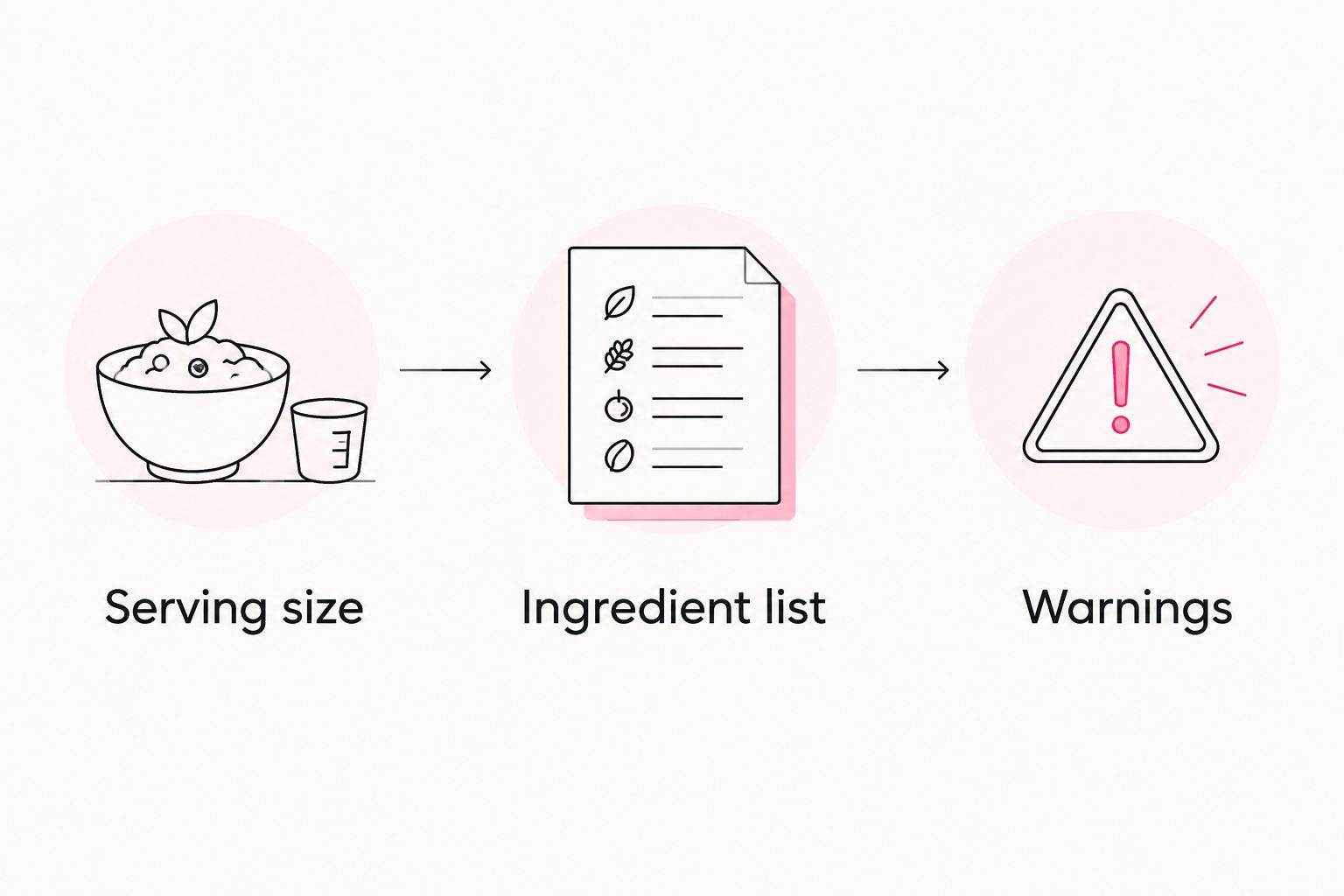
Keep the label photo with your 2026 treatment notes. If you later buy a different formulation, repeat the review rather than carrying over the original decision.
Your daily routine
Introduce and track an approved addition
- Follow the reviewed instructions. Use the serving and timing agreed with your clinician and permitted by the product label. Do not increase a serving because you ate less that day.
- Keep the rest of the routine clear. When your clinician agrees, introduce 1 new product at a time. Starting several additions together makes it harder to identify what changed your digestion or appetite.
- Record what actually happened. Note the product, serving used, meal context, and symptoms. Plain descriptions such as nausea after drinking or difficulty finishing dinner are more useful than a general rating of wellness.
- Check whether the original problem improved. If the goal was easier protein intake, review that goal. Weight change alone does not show that a supplement is meeting your nutritional needs.
- Bring the record to follow-up. Discuss tolerance, eating patterns, and the need to continue. Do not adjust prescribed treatment based only on your log.
Expected result: Your clinician can distinguish the planned addition from other changes and assess whether it deserves a place in your routine. An approved product is still worth reconsidering if it worsens symptoms or displaces needed meals.
Keep tracking simple. The record should make follow-up easier, not turn eating into another source of pressure. You need enough detail to explain a pattern, not a perfect diary.
When your GLP-1 plan or appetite changes
Repeat the workflow whenever your prescriber changes treatment, you switch supplement formulations, or your ability to eat changes noticeably. A routine that suited your earlier appetite deserves another look when your intake or tolerance changes.
- Update the medication-and-supplement list. Record the current prescription instructions and products you actually use.
- Describe the new eating pattern. Explain whether meals became smaller, a drink started replacing food, or digestive symptoms became more troublesome.
- Recheck the original purpose. Ask whether the supplement still addresses a real gap and whether another approach would fit better.
- Agree on the next step. Your clinician should decide whether to continue, change, or stop an addition and whether symptoms need evaluation.
Protein products deserve particular attention when digestive comfort changes. Comparing low-FODMAP protein powders addresses fermentable carbohydrate content, but that is a different question from whether a powder meets your nutrition needs or suits your medication plan. A low-FODMAP label does not establish GLP-1 compatibility.
If irritable bowel syndrome or food sensitivity affects your choices, discuss the ingredient list with a dietitian. Do not begin a restrictive eating pattern solely because a powder caused discomfort; the serving, ingredients, other foods, and medication-related symptoms all deserve review.
For a 2026 follow-up, bring the current label even when the product name has not changed. Treat the next review as a check of your present routine, not a repeat of an earlier approval.
Troubleshooting your routine
The supplement makes nausea or fullness worse
Contact your care team before continuing a new, nonessential supplement that worsens symptoms. Record the product and its relationship to meals and medication use. Do not assume that discomfort means the product is working.
A protein drink has become your main meal
Ask a dietitian or clinician to review the overall eating pattern. A protein powder does not necessarily supply the energy, fiber, fats, and range of nutrients you need. Assess what the drink replaces, not just what it contains.
Several products contain the same nutrients
Put the labels side by side and ask a pharmacist or clinician to review the combined servings. Include fortified drinks and powders, not only tablets. Do not assume that products are compatible because each is sold separately.
Symptoms are persistent or severe
Seek prompt medical advice for persistent vomiting, difficulty keeping fluids down, or severe abdominal pain. These symptoms need medical assessment, not another supplement or an experiment with serving size. Follow your prescriber's instructions for urgent concerns.
You cannot tell whether the addition helps
Return to the original goal and your record. If the product has no clear purpose or benefit, ask whether to discontinue it. Do not keep adding products to compensate for an unresolved eating or treatment concern.
Customize your workflow
A personalized plan should fit your daily life as well as your health needs. Tell your clinician about work hours, meal preparation, food preferences, and the moments when eating feels hardest. These details help turn general nutrition advice into a routine you can follow.
For Skindale Medspa medical weight loss clients, a useful consultation agenda is straightforward:
- Explain the eating concern you want to solve.
- Show the exact supplement label and complete medication list.
- Ask who should set and review your nutrition goals.
- Confirm which symptoms require a call and how to arrange follow-up.
Keep the plan small enough to understand. A clearly defined goal and a reviewed addition are easier to assess than a collection of products with overlapping promises. Your 2026 routine should remain open to revision as your appetite, health, and treatment change.
FAQ
Can I take Sol Nutrition supplements with a GLP-1 medicine?
Have your prescriber or pharmacist review the exact Sol Nutrition product before combining it with a GLP-1 medicine. Compatibility depends on the ingredients, other medicines, health conditions, and intended use—not the brand name alone.
What's the best supplement for GLP-1 weight loss?
The best choice addresses an identified nutrition need and fits your clinician-reviewed plan. A supplement is not automatically necessary, and a weight-loss claim does not establish benefit or compatibility.
Do I need protein powder while taking a GLP-1?
Protein powder is not automatically required during GLP-1 treatment. Discuss it if eating enough protein-containing food is difficult, and have your clinician or dietitian set a personalized goal.
Is a protein shake better than a meal on a GLP-1 plan?
A protein shake is not automatically better than a meal. Its role depends on its ingredients and what it replaces; protein content alone does not make it nutritionally complete.
Are low-FODMAP protein powders suitable for everyone taking GLP-1 medicines?
Low-FODMAP protein powders are not automatically suitable for everyone taking GLP-1 medicines. Fermentable carbohydrate content is separate from medication compatibility, allergies, overall nutrition, and individual tolerance.
Should I change my supplement routine when my prescription changes?
Review your supplement routine with your clinician when your GLP-1 prescription or eating pattern changes. Update the medication list and bring the current labels so the review reflects what you actually take.
Can supplements replace prescribed medical weight loss treatment?
Supplements do not replace prescribed medical weight loss treatment or medical follow-up. Skindale Medspa offers personalized medical weight loss and wellness care in Scottsdale; bring supplement questions into that care discussion.
One last thing
The most useful detail on a supplement package is often the serving size, not the headline claim. Compare what you actually take with the label and your clinician's instructions before judging how the product fits your plan.
Bring the bottle or a clear label photo to your next visit. If you want support building a nutrition routine around medical weight loss, schedule a personalized consultation with Skindale Medspa and start with the concern that matters most to you.