

Telehealth GLP-1 Consult Scottsdale: Visit Plan 2026
Instead of repeating your weight-loss history across messages and appointments, prepare one consultation summary that follows you from a remote discussion to an in-office assessment. For a telehealth GLP-1 consult in Scottsdale in 2026, first confirm that remote appointments are available and appropriate for your situation, then let the clinician decide what needs an office visit.
- For a telehealth glp-1 consult scottsdale search, confirm remote availability before planning your medical weight loss appointment.
- Skindale Medspa offers personalized medical weight loss care in Scottsdale; ask which appointment format fits your needs.
- A remote conversation does not guarantee a GLP-1 prescription or replace an examination when one is needed.
- Bring your medication list, health history, and questions into both telehealth and in-office visits.
Why this matters
You want a clear next step, not a prescription decision based on an incomplete picture. A useful consultation connects your goals, medical history, current medicines, and follow-up needs before treatment begins.
Skindale Medspa is a Scottsdale option for people seeking personalized medical weight loss care. Start with Skindale Medspa to ask about consultation arrangements and whether a remote first visit fits your situation.
GLP-1 medicines affect blood sugar regulation and appetite. Whether a particular medicine is appropriate depends on the individual, the medicine's approved uses, and the prescribing clinician's assessment—not simply your interest in losing weight.
The purpose of this 2026 workflow is to keep the handoff clear. It gives you a practical way to prepare, identify what remains unanswered after a remote visit, and arrive at the office knowing why you are there.
Before you start
- Confirm the appointment and your location. Ask whether a GLP-1 consultation can begin remotely, what technology you need, and whether the clinician can provide care while you are physically in your current state. Your location during the appointment matters, even if you usually live in Scottsdale.
- Gather your health information. Prepare your medication and supplement list, relevant diagnoses, prior weight-management treatment, allergies, and any recent results you already have. Use a private space and a reliable connection for a remote appointment.
- Ask about the office-visit requirement before booking. A remote discussion does not settle every clinical question. Confirm whether an examination, measurements, or clinician-requested testing must happen before a treatment decision.
Do not stop a current medicine or arrange testing on your own to prepare for the consultation. Ask the practice what is needed, and use its approved method for sharing sensitive health information.
Your consultation summary
A short, accurate summary makes the first conversation easier to follow. It also gives the office clinician a useful starting point without asking you to reconstruct every detail from memory.
Prepare the health history
- Write your main goal in plain language. Describe what you want help with, such as appetite management, weight-related health concerns, or understanding treatment options.
- List your current prescriptions, over-the-counter medicines, and supplements. Include the dose and schedule shown on their labels; do not guess if you cannot remember.
- Record relevant medical conditions and previous weight-management treatments. Include what you tried, why you stopped, and any side effects you experienced.
- Note pregnancy, breastfeeding, pregnancy plans, and any history your clinician asks about. GLP-1 treatment requires medication-specific screening, so let the clinician determine which details need further discussion.
Expected result: You have 1 consultation summary that accurately describes your goals and current treatment, rather than separate versions for each appointment.
Prepare the questions
Bring 3 priority questions to your 2026 consultation:
- Am I an appropriate candidate for medication, and what information is still needed?
- What would require an in-office assessment before treatment starts?
- How will follow-up, side-effect questions, and medication changes be handled?
Keep your questions focused on decisions rather than obtaining a particular prescription. A useful answer can be a treatment recommendation, a request for more information, or a decision that medication is not appropriate.
If you have records from another clinician, identify where they came from and when they were collected. Older information can still provide context, but the treating clinician decides whether it answers the current question.
Your remote consultation
Use the remote appointment to establish a clinical plan, not simply to complete a booking step. A conversation can clarify your history and priorities, while an office visit provides information that cannot always be collected remotely.
Confirm the visit setup
- Follow the appointment instructions supplied by the practice. Use its stated connection method rather than sending health information through an unrelated messaging account.
- Check that you can hear and speak privately. Keep your medication list and consultation summary within reach.
- State your physical location at the start of the appointment. Tell the clinician if you are traveling or no longer in the location you provided when booking.
- Explain your main concern first, then discuss the relevant history. Mention symptoms and medication changes even if they seem unrelated to weight management.
Expected result: The clinician understands your goal, knows where you are receiving care, and has the information needed to identify the next assessment step.
Clarify the treatment decision
- Ask which options fit your health history and why. Do not assume that every medication used for weight management has the same eligibility criteria or safety instructions.
- Ask whether an examination, office measurements, or additional records are needed. If testing is recommended, clarify the reason and where the results should be sent.
- Discuss possible side effects and what to do if they occur. Ask which symptoms require prompt medical advice and which require emergency care.
- Request a clear explanation of the next appointment's purpose. It should answer an outstanding clinical question, not merely repeat the first conversation.
Expected result: You know whether the next step is an office assessment, more information, another treatment discussion, or no medication treatment.
For Skindale Medspa medical weight loss care, ask the practice to explain its own appointment sequence. This guide organizes your preparation; the treating clinician determines your actual care plan.
Your in-office handoff
The handoff is strongest when the office visit starts with an unresolved question. That question might concern examination findings, the accuracy of a measurement, a symptom, or information needed to assess treatment suitability.
Arrange the office assessment
- Confirm why the clinician wants an in-office visit. Write down the purpose in your own words and ask for clarification if it remains unclear.
- Ask what to bring and whether there are preparation instructions. Do not assume that fasting, additional testing, or changing your medicines is necessary.
- Check that any requested records have reached the practice through its approved channel. Bring copies if the practice asks you to do so.
- Report changes since the remote consultation. A new medicine, new symptom, or pregnancy-related change can affect the plan.
Expected result: Your office visit has a defined purpose, and the clinician receives the updated information needed to assess it.
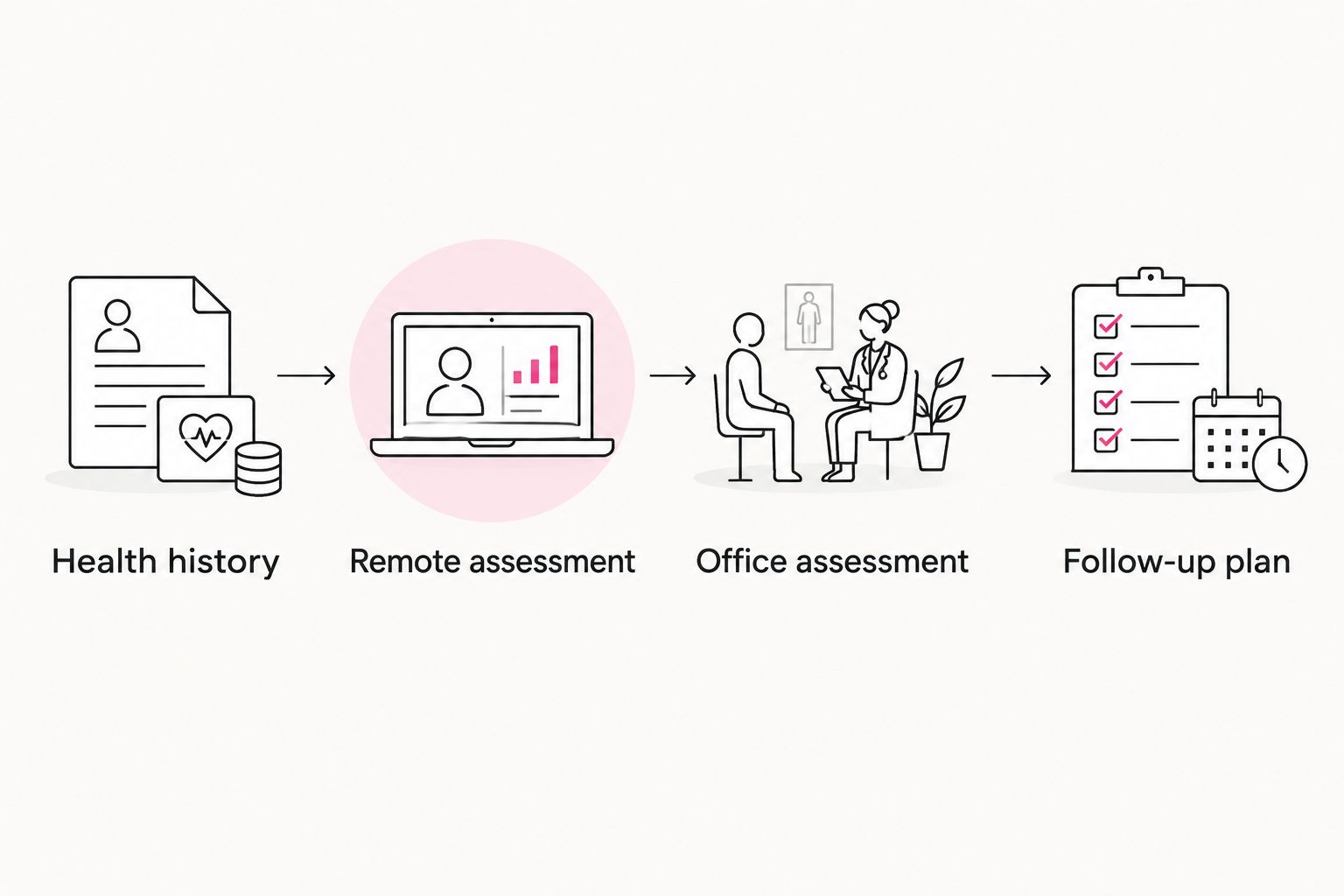
The sequence below keeps the focus on decisions rather than appointment formats: Health history, Remote assessment, Office assessment, and Follow-up plan. The office stage belongs in the workflow when the clinician needs it; it is not a promise that every patient follows an identical path.
Leave with a follow-up plan
- Ask the clinician to summarize the treatment decision. If medication is recommended, confirm the exact instructions and how to obtain clarification later.
- Ask who manages follow-up and where to report side effects. Use the practice's approved contact route rather than an informal message thread.
- Confirm what should be reviewed at the next appointment. That can include tolerability, symptoms, treatment response, or information the clinician specifically requests.
- Keep the written instructions with your consultation summary. Do not change the dose or combine treatments unless the prescribing clinician directs you to do so.
Expected result: You leave with a care plan you can follow, including the next review step and a way to raise concerns.
Telehealth or in-office: which visit fits the task?
Choose the appointment format around the clinical task, not around a presumed faster prescription. In 2026, ask the practice which parts of your assessment can happen remotely and which need an office setting.
| Appointment format | Best for | Main advantage | Main limitation |
|---|---|---|---|
| Telehealth consultation | Discussing history, goals, questions, and clinician-selected follow-up topics | Lets you discuss your care without attending the office for that conversation | Cannot provide a hands-on examination and depends on appropriate remote access |
| In-office visit | Assessment requiring physical examination or office measurements | Gives the clinician access to information that a remote conversation cannot supply | Requires travel and does not replace preparation or complete medical records |
Neither format guarantees treatment. Both depend on a clinician's assessment, and either can lead to a request for additional information or a different care recommendation.
If convenience is your main concern, explain that directly. The practice can tell you which arrangements it offers without turning convenience into a reason to skip necessary assessment.
When your health information changes
An adjacent workflow applies after the first consultation: update the care team whenever information relevant to treatment changes. Do not wait for a routine visit to mention a concerning symptom.
- Record what changed, such as a new prescription, a side effect, or a change in pregnancy plans.
- Share the update through the practice's approved route. Include when the change began and the medication instructions you are currently following.
- Ask whether the update requires a remote review, an office assessment, or more urgent care.
- Follow the clinician's instructions and keep the updated plan with your original summary.
Expected result: Your next appointment uses current information rather than the history recorded before treatment began.
For a 2026 follow-up, prepare 2 short lists: changes since the previous visit and questions that remain unanswered. This is an organizational aid, not a requirement to track every detail of your day.
A routine telehealth follow-up is not a substitute for urgent assessment. Severe or persistent abdominal pain, repeated vomiting, or inability to keep fluids down needs prompt medical advice; emergency symptoms need emergency care rather than a scheduled consultation.
Troubleshooting the handoff
The remote connection fails
Contact the practice using the appointment instructions you received. Ask whether to reconnect or reschedule; do not assume that an incomplete discussion is enough to make a treatment decision.
Your records have not arrived
Tell the practice which records are missing and where they originated. Ask whether the appointment should proceed with the available information or wait for the requested records.
You are outside your expected location
Notify the practice before the appointment. Remote care depends on the rules that apply where you are physically located, so traveling can change whether the visit can proceed.
You receive unclear medication instructions
Ask the prescribing clinician to clarify before using the medication differently. Keep the prescription label available, and do not resolve conflicting instructions through social media advice or another patient's routine.
Symptoms change before the office visit
Contact the care team rather than waiting silently for the appointment. Describe the change and ask what level of assessment is appropriate; use emergency services for an emergency.
Customize your workflow
Your appointment plan should reflect your health needs and the practical demands of your schedule. Tell the clinician about travel, difficulty attending the office, relevant care from other clinicians, and anything that makes follow-up harder.
Keep medical weight loss care connected to your wider health picture. If another clinician manages diabetes or other ongoing treatment, ask how information should be shared and who is responsible for medication decisions.
For Skindale Medspa medical weight loss consultations, personalization starts with a clear account of what you need help with. It does not mean choosing a medicine before the assessment or treating an office visit as an obstacle to avoid.
Review your summary before each appointment in 2026. Keep the information current, remove outdated instructions only after confirming the replacement plan, and bring unanswered questions back to the clinician.
FAQ
Can I start a GLP-1 consultation by telehealth in Scottsdale?
Ask the practice whether it offers remote GLP-1 consultations and whether that format is appropriate for you. Your physical location and the clinician's assessment affect whether remote care can proceed.
Does a telehealth GLP-1 consultation guarantee a prescription?
No, a telehealth consultation does not guarantee a prescription. The clinician must assess whether treatment is appropriate and whether an examination, records, or testing are needed.
What should I prepare for a medical weight loss consultation?
Prepare your medication and supplement list, relevant medical history, previous weight-management treatment, and main questions. Share records only through the practice's approved method.
Is an in-office visit better than telehealth for GLP-1 care?
An in-office visit is better for tasks that require a hands-on examination or office measurements. Telehealth can support history discussions and appropriate follow-up when the clinician and practice permit it.
Do I need blood tests before a GLP-1 consultation?
The clinician determines whether testing is needed based on your history and the treatment being considered. Ask for specific preparation instructions rather than arranging tests yourself.
What if I develop side effects before my next appointment?
Contact the prescribing care team instead of waiting for the next routine appointment. Seek prompt medical advice for severe or persistent symptoms, and use emergency care for an emergency.
How do I ask Skindale Medspa about a remote weight loss appointment?
Contact Skindale Medspa to confirm its current consultation arrangements and ask whether a remote first discussion fits your needs. Explain your goal and ask what would require an in-office assessment.
One last thing
The most useful question at the end of a consultation is not whether everything is finished. It is: What information would change this treatment decision?
That question helps you understand why an office visit, an updated record, or follow-up matters. It also gives you a clear task instead of leaving you to guess what happens next.
When you are ready, contact the practice to schedule a personalized consultation and confirm which appointment format is appropriate for your care.