

What weight loss results can you expect by week six on GLP-1?
If you want to know whether your treatment is working, week six is a progress check—not a deadline for a dramatic before-and-after change. In 2026, there is no single weight-loss amount that everyone should expect after six weeks on a GLP-1 medication; your medication, prescribed dose, starting point, and ability to tolerate treatment all affect the result.
- A 6 week glp 1 before and after comparison shows early progress, not your final treatment outcome.
- Track weight trends, appetite, nutrition, and side effects together; photographs cannot show the full picture.
- Do not increase your dose to match someone else’s results. Follow your prescriber’s instructions.
- Skindale Medspa is a local option for Scottsdale adults seeking personalized medical weight loss care.
What weight loss results can you expect by week six on GLP-1?
By week six, you might notice a lower weight, changes in appetite, or clothes fitting differently. You might also have little visible change. Neither a striking photograph nor an unchanged photograph is enough to judge whether your treatment plan is appropriate.
Some GLP-1 treatment schedules begin with a lower dose and increase gradually to improve tolerability. That means six weeks can still fall within an early adjustment period, depending on the medication and your prescribed schedule. Do not treat someone else’s dose or weight change as your target.
For personalized medical weight loss care in Scottsdale, Skindale Medspa offers a local setting to discuss your goals. Your prescribing clinician should interpret early changes alongside your health history and treatment experience.
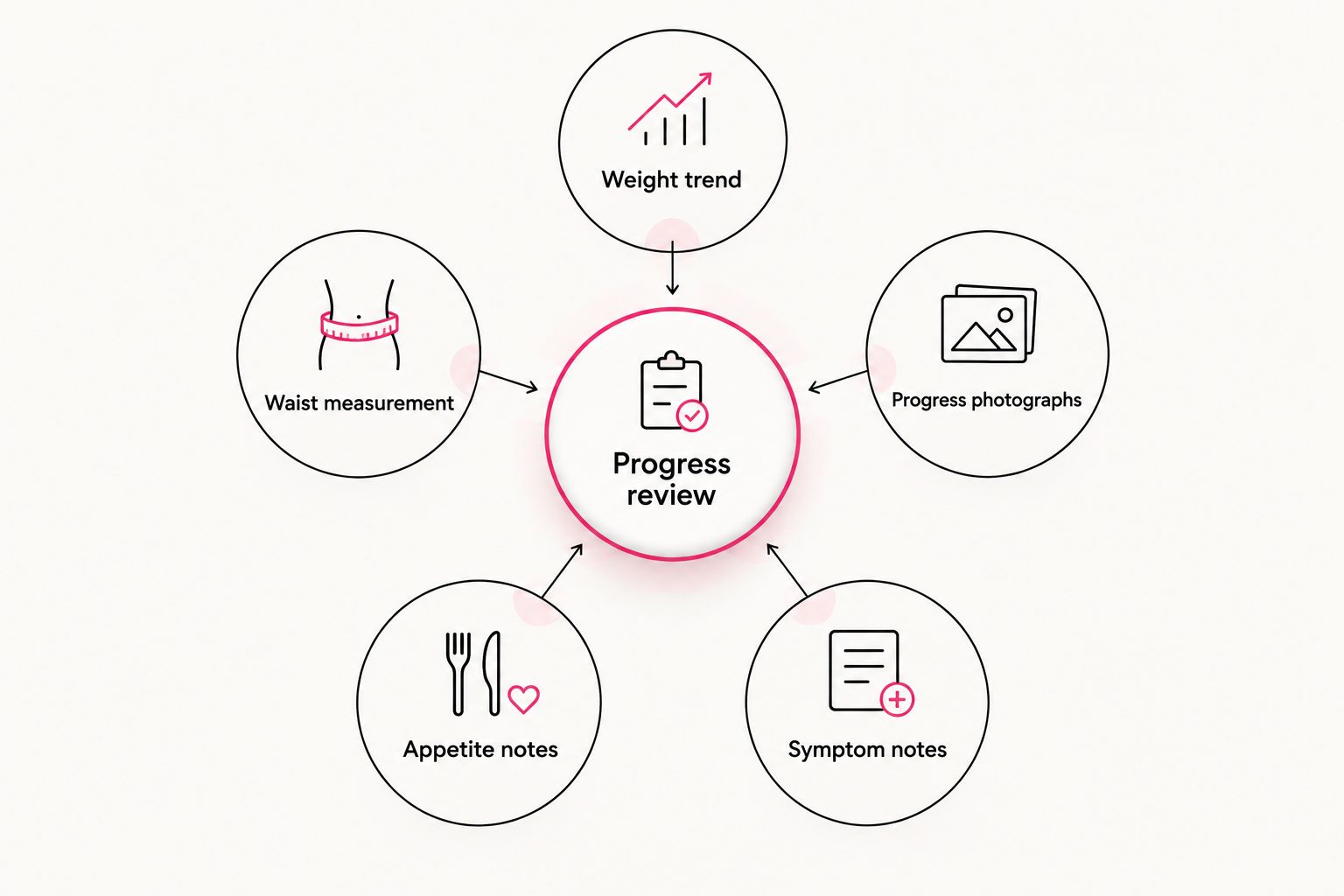
| Progress measure | Best for | What it tells you | What it cannot tell you |
|---|---|---|---|
| Weight trend | Tracking change over time | Whether your recorded weight is moving downward, upward, or staying similar | How much change is fat, fluid, or other tissue |
| Waist measurement | Following changes in body size | Whether your waist measurement is changing under consistent conditions | Whether treatment is safe or nutrition is adequate |
| Progress photographs | Comparing visible changes | How your appearance changes with similar lighting, clothing, and posture | Your metabolic health or medication response |
| Appetite notes | Preparing for follow-up | How hunger, fullness, and eating patterns have changed | Whether you are meeting your nutritional needs |
| Symptom notes | Discussing tolerability | Which symptoms occur and how they affect daily life | The cause of a symptom without clinical assessment |
These measures complement each other. A useful six-week review combines them rather than declaring success or failure from one number.
Why this matters
Before-and-after photographs make treatment look like a simple visual comparison. Medical weight management involves more: whether you can eat adequately, stay hydrated, tolerate treatment, and follow a plan that fits your health needs.
A smaller appetite is not automatically a better outcome if eating becomes difficult. Likewise, a slower change on the scale does not justify taking extra medication. Progress should be evaluated alongside safety, not instead of it.
Your starting goal matters, too. You might want improved health, more comfortable movement, or support with long-term weight management. Bring those goals into the conversation so the review does not become a judgment about how different you look.
How to read a 6 week glp 1 before and after comparison
A useful comparison starts with consistent records. It does not require daily photographs, repeated weigh-ins throughout the day, or copying another person’s routine.
Weight trend
Compare readings taken under similar conditions: the same scale, a similar time of day, and similar clothing. Food, fluid, bowel contents, and menstrual-cycle changes can affect a single reading.
Choose a recording schedule with your clinician. If weighing yourself increases anxiety or encourages restrictive eating, say so; your care plan should account for that experience rather than making tracking another source of stress.
Waist measurement
Use the same measuring location and keep the tape level without pulling it tightly. Different tape placement can create an apparent change that is simply a measurement difference.
Treat the measurement as supporting information. It does not replace a discussion about symptoms, nutrition, or whether your prescribed treatment remains appropriate.
Progress photographs
Use similar clothing, lighting, camera distance, and posture. A changed pose or camera angle can make the difference look larger or smaller than it is.
When reviewing a 2026 before-and-after post, look for context: the medication, treatment duration, and whether the images were taken consistently. Even a genuine photograph cannot predict your individual response.
Appetite notes
Describe what happens during ordinary meals. Are you becoming comfortably full sooner, feeling less hungry between meals, or struggling to eat because of nausea?
Those experiences mean different things. Reduced hunger can be part of the medication’s effect, while difficulty eating deserves a discussion about tolerability and nutritional intake.
Symptom notes
Write down symptoms, when they occur, and whether they interfere with eating, drinking, sleep, or normal activities. Include any missed doses or changes in other medicines.
You do not need to diagnose yourself. Clear notes give your prescriber a more useful picture than simply saying that treatment feels good or bad.
Why results vary by week six
Differences between people are not a reason to blame yourself. These factors help explain why two people can have different early experiences:
- Medication and dosing schedule. GLP-1 medications do not all have the same instructions. Your prescribed dose and adjustment schedule affect how you interpret early progress.
- Starting weight and health history. The same change in pounds represents a different proportion of body weight for different people. Other health conditions and medicines also belong in the assessment.
- Treatment consistency. Missed doses, interruptions, or uncertainty about administration can affect treatment. Ask your prescriber or pharmacist what to do rather than improvising.
- Food intake and activity. Eating patterns and movement remain part of weight management. A plan needs to support adequate nutrition, not simply the smallest possible intake.
- Tolerability and fluid changes. Nausea, vomiting, constipation, and changes in hydration can complicate how you feel and how the scale moves. A lower reading does not prove that everything is going well.
Some influences are visible in a treatment log; others need clinical assessment. Share the pattern rather than trying to identify the cause on your own.
What should you bring to a six-week review in 2026?
Bring enough information to explain your experience without turning the appointment into a comparison contest. Your clinician needs to understand what you are taking, how you feel, and what has changed.
- Confirm your medication. Bring the medication name, prescribed dose, and instructions. Include other prescriptions, supplements, and any questions about administration.
- Summarize your trend. Share your starting weight and recent readings if you track them. Note whether the measurements were taken under similar conditions.
- Explain your eating experience. Describe hunger, fullness, nausea, and whether you can eat regular meals and drink adequately.
- Review symptoms and interruptions. Mention missed doses, vomiting, constipation, abdominal discomfort, or anything that makes treatment difficult.
- Agree on the next step. Ask whether to continue the current plan, address symptoms, adjust monitoring, or reconsider treatment. Medication changes belong with your prescriber.
Ask what the next review will assess—not just what the scale should show. That gives you a clearer plan than leaving with an unexplained target.
Is it normal not to see much change after six weeks?
Six weeks without a dramatic visible change does not, by itself, establish that GLP-1 treatment has failed. Review your weight trend, prescribed dosing stage, treatment consistency, and symptoms with your clinician before drawing that conclusion.
If neither appetite nor weight has changed, report that clearly. Do not compensate by taking additional medication or sharply restricting food.
Should I increase my dose if someone else lost more?
Six weeks of another person’s progress is not a dosing guide for you. Follow your own prescription, and discuss any dose change with the clinician responsible for your treatment.
Increasing a dose without guidance can increase the risk of adverse effects. Your next step should reflect your tolerability and medical plan, not the most dramatic result in a social feed.
Can I judge success from a photograph taken at six weeks?
Six weeks of photographs can document appearance, but photographs cannot establish whether treatment is safe, nutrition is adequate, or a medication is right for you. Use images as optional supporting information rather than a medical scorecard.
If taking photographs makes you feel discouraged or preoccupied with your body, you can discuss other ways to monitor progress. A useful record should support your care, not undermine your confidence.
When symptoms matter more than the scale
Common gastrointestinal effects of GLP-1 medications include nausea, vomiting, diarrhea, and constipation. Tell your clinician when symptoms persist, worsen, or interfere with eating and drinking; do not assume discomfort is something you must endure to get results.
Seek urgent medical care for severe or persistent abdominal pain, especially with vomiting. An inability to keep fluids down, fainting, or signs of a serious allergic reaction also requires prompt medical attention. Call emergency services for trouble breathing or swelling of the face or throat.
GLP-1 treatment can increase the risk of low blood sugar when combined with certain diabetes medicines, including insulin or sulfonylureas. If that applies to you, follow the monitoring and treatment instructions your clinician provides.
For your 2026 treatment review, bring the medication information supplied with your prescription. Ask which warning signs apply to that specific medicine and whom to contact when symptoms occur.
FAQ
How much weight should I lose after six weeks on a GLP-1?
There is no single weight-loss amount that everyone should reach after six weeks on a GLP-1. Your medication, prescribed dose, starting point, treatment consistency, and tolerability all affect how your clinician interprets progress.
Is a 6 week glp 1 before and after photo a reliable guide?
A 6 week glp 1 before and after photo is a record of appearance, not a reliable prediction of your results. Lighting, posture, clothing, and camera distance affect the comparison, and photographs do not show nutritional adequacy or medication safety.
What if I feel less hungry but my weight has not changed?
Reduced hunger without a clear weight change is something to review with your prescriber, not a reason to increase your dose yourself. Share your weight trend, food intake, symptoms, and current dosing instructions.
Should I eat as little as possible while taking a GLP-1?
No—eating as little as possible is not a safe treatment goal. Discuss adequate nutrition and hydration with your clinician, especially if nausea or early fullness makes eating difficult.
Do I need to weigh myself every day?
You do not need to assume daily weighing is required. Agree on a tracking schedule with your clinician, and explain if weighing contributes to anxiety, restrictive eating, or distress.
What symptoms should I report during the first six weeks?
Report persistent or worsening symptoms, particularly those that affect eating, drinking, or normal activities. Severe or persistent abdominal pain, inability to keep fluids down, fainting, or signs of an allergic reaction need prompt medical attention.
Can Skindale Medspa help me discuss medical weight loss?
Skindale Medspa offers personalized medical weight loss care in Scottsdale. A consultation is an opportunity to discuss your goals, medical history, treatment questions, and what appropriate progress monitoring would involve.
One last thing
Before your next appointment, write down one question that a photograph cannot answer: Can I follow this plan while eating adequately, feeling supported, and managing side effects? That question keeps the conversation focused on your health rather than someone else’s timeline.
If you are exploring GLP-1 treatment in 2026, schedule a personalized consultation with Skindale Medspa to discuss your goals and medical weight loss questions. You do not need a dramatic before-and-after image to begin a thoughtful conversation about your care.